Thinking outside the brown bottle

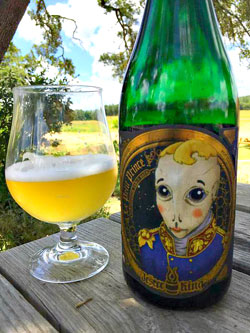
Jester King Le  Petit PrincePardon the length, but I’m posting the entirety of the email that Jester King Brewery sent out yesterday. Thoughts after the message.

Earlier this year, we began experimenting with packaging some of our beer in green bottles. We started by taking a portion of our February batch of Le Petit Prince Farmhouse Table Beer, and naturally conditioning it in bottles like the one seen in the photo above. After three months of conditioning, we’re quite pleased with the results! We started selling “green bottle Le Petit Prince” in our tasting room this past weekend, and we plan on packaging some of our upcoming batches of Noble King and Mad Meg in green bottles. We’re excited to see where this experimentation takes us! For now, Le Petit Prince in green bottles is only available at our tasting room, and we still have Le Petit Prince available in brown bottles like before.

So why are we doing this?

Here’s our head brewer Garrett Crowell’s explanation:

“My pursuit of the use of green bottles stems mostly from the character of all of my favorite beers. Cuvee de Jonquilles, Blaugies, Thiriez, Fantôme, Cantillon, Dupont, all use green bottles. I’ve had brown bottle versions of some of these beers, and have had them on draft as well and there is an element missing from those versions that the green bottles have. While green bottles permit the risk of light struck/skunky character, I feel they add character, even beyond skunkiness. So many breweries have attempted to mimic the classic Saison Dupont yeast profile, and I feel what is most often missing is the light struck character that is integral to the profile of that beer.

Beer is as delicate as wine. Pasteurized, shelf stable beer has dumbed down beer consumers into believing that something will still taste fresh after leaving it in the trunk of their car, or in the sun, etc. Hopefully, green bottles will emphasize that our beer is a living thing, and that the way it’s treated will significantly alter the experience one can have with it.

I feel that beer is losing individuality through structure, and the expectation to fulfill guidelines. I absolutely like skunky beer, oxidized beer, or “flawed” beer. We allow our beer to pick up “peripheral” character that deviates from guidelines, whether it’s a bit of oak, Brettanomyces, or lactic acidity. Horse barn, goat sweat, and brett character are embraced, yet skunkiness is considered a flaw. If the way I create, and eventually package a beer renders it unfit for BJCP guidelines, then I consider that a success and furtherance of creativity. I feel as though the status quo of brewing is to find a set of guidelines, create a product that fits within them, enter a competition, and receive an award. It reminds me of standardized testing from grade school. Students spend half the year learning how to take a test, and creativity is suppressed for the sake of passing test scores.

I understand that green bottles and light struck character are going to be a challenge for most beer enthusiasts. I think we’re in a unique and important position to break down some of the indoctrination that is present and document something truly beautiful and unique.”

                  — Jester King Head Brewer Garrett Crowell

I think this is brilliant, even though I’m the guy who doesn’t like to buy Saison Dupont “off the shelf.” I usually ask if the store has unopened cases and if I can have a bottle from one of them, and then expect to see it put quickly into a paper bag. I hurry it home and store it in the dark. My dermatologist wishes I was as careful with myself.

(A couple of weeks ago at Country Boy Brewing in Lexington, Kentucky, when customers who had picked up bottles from a special release left them sitting in the sun on another part of the table where we were sitting I unobtrusively shoved them into the shade. And these were brown bottles. Heck, I’m careful where I put glasses of pilsner on a sunny day.)

So my palate doesn’t necessarily align with Crowell’s. Skunkiness generally masks other flavors I prefer from beer — I typed generally because I’m willing to concede that just above threshold it may add complexity. But that’s me. And if I want Petit Prince in a brown bottle I can still get it. Looks like a win-win, because I’m for anything that emphasizes that “beer is a living thing, and that the way it’s treated will significantly alter the experience one can have with it.”

Session #98: Cans, bottles or aroma?

The SessionHost Nathan Pierce has asked contributors to write about Cans or Bottles for The Session #98?
A dozen years ago Oscar Blues founder Dale Katechis was pretty much out their on his own, advocating that small breweries could package their beers in cans. His was Dale’s Pale Ale. He turned out to be right and his empire just keeps growing.

At the time, I had this question for him: “What about the aroma (hops and malt) you that we expect and enjoy from a beer like this?”

And he had this answer: “Well, no, not directly from the can. I tell people, when I drink a LaChouffe, I don’t drink it right from a bottle. I pour it into a glass. People see the can and think they need to drink right from it. You’d never drink a full-flavored beer from a bottle. This is a better, safer package than a bottle. It’s draft beer in a mini-keg, and you don’t drink draft beer right from a full-size keg.”

It hasn’t exactly worked out like that. People drink Heady Topper and La Cumbre Elevated IPA directly from cans. I’m a fan of beer in cans done right (they still don’t make bad beer or badly packaged beer better) for all the reasons you are bound to see elsewhere today. But I’m also a fan of beer aroma, and I’m not inclined to want to stick my nose up to that half-inch wide opening in the can and inhale deeply. That would definitely be fussing.

Granted, hop aromas (citrus, resiny, fresh berries) burst out of that opening when you pop open 21st Amendment’s Down to Earth Session IPA. It tastes fine right out of the can. But it has more aroma and flavor poured into a glass. It is more complex, yet at the same time seems less demanding. That makes for a good session beer, with aroma and flavor when you want to pay attention, but not so needy that you can’t keep paying attention and instead can do something else, like engage in conversation.

More hops, because, maybe, more West Coast IPAs

MONDAY BEER LINKS, MUSING 03.16.15

Procedural note. We are on holiday. This was written last week (so pardon any overlaps with Boak & Bailey) and appears today through the wonders of technology. I have turned comments off because although I trust that everybody would remain civil in my absence maybe I don’t, really.

Heaps more hops.
Hops Products Australia is going to spend about $10 million US to expand production by 50 percent over the next three years. Every hop helps, but some perspective: Australian farmers harvested just north of 1,000 acres last year, so if all of Australian production were to grow 50 percent that would be 500 more acres. Farmers in the American Northwest are adding more than 5,000 acres in 2015, and it will cost a lot more than $10 million. No flag waving here, just noting how fast demand for “aroma” hops has exploded. This is HPA’s “first significant capital investment in land, plant and equipment in 20 years” simply because demand didn’t warrant it before. Australians grow some lovely hops. I’ve only had the newest, Enigma, in a couple of beers, but it seems to have a bright future. [Via The Crafty Pint]

Young and Old – How We’ve Grown: The Darwin Link pt II.
The Pub: Where Grown-Ups Make Friends.
New York: Last Bar Seat, Allen Street Pub, Albany.
Snugs. Taprooms. Dark milds. Sitting among houses on a side street. Friends made. These things all still exist. [Via Beer Compurgation, Boak & Bailey, A Good Beer Blog]

Understanding farmhouse ale.
I was already thinking Lars should write the “Indigenous Beer: Brittany to the lower Volga, from the Alps to the Arctic Circle” book. “Beer in the farmhouse context was a lot more than just an alcoholic drink, in that it played a number of deeply important roles in social and religious life.” Video above a fascinating look at farmhouse brewing in Russia. [Via Larsblog]

You’re drinking your beer too cold – and here’s why.
Long time ago, like before Miller Lite was available nationally, when I worked nights about once a week we’d leave the office for our mid-shift meal. When we went to a place that served beer, which was likely Pabst, one member of our group would immediately order two beers after he was seated. He did not do this so the second beer would be at a proper temperature — an approach suggested in this story — but because in his experience it always took too long for the second beer to arrive. In fact, I’m pretty sure his second never had time to reach the “proper” drinking temperature. [Via Chicago Tribune]

A Disruptive Influence?
Ah, yes. The elephant in the room. Cue Jason Isbell.
[Via Boak & Bailey]

How the West Coast-Style IPA Conquered the World.
Stories like this always make me wonder where Bell’s Two-Hearted Ale, first brewed in 1992, fits in the converstation. And reminds me that Bell’s brewed a beer it called Big Head for the 2008 Craft Brewers Conference in San Diego and called it a “San Diego Ale.” [Via First We Feast]

German Craft Beer at the Crossroads? Beer Observations 2015.
If Germany really is at a crossroads, then it all happened much faster than here in the US. My guess is the conversation has just started. Oh, yeah, and I found this thought particularly interesting, “Hamburg is steadily approaching equal footing with Berlin quantitatively, and in qualitative terms may even have already nosed ahead.” [Via Mixology]

Full Sail Sells to Private Equity Firm — What Does it Mean?
A bit of logistics I hadn’t considered: the fact that a private equity firm bought Full Sail meant there was no brewery (as there would be if a large entity like Anheuser-Busch had come knocking) “means that they need all our employees.” There are multiple big pictures to consider, including the future of good size brewing companies (like Full Sail). But one picture should be clear. Local breweries are not in danger. One hundred and fifty-nine brewpubs opened nationwide last year, the most since 1997. Private equity firms are not going to be taking them over. They are often small, and some will go out of business because local businesses do. Kind of like hamburger joints (threw that one in for Joe Stange). But others will open. [Via All About Beer]

How Lagunitas dodged a drug bust to become a craft beer powerhouse.
A lovely long read, and just in time for St. Patrick’s Day. [Via Mashable]

Session #97: Farms and farmhouse beers

The SessionHost Brett Domue of Our Tasty Travels has asked contributors to write about “Up-and-Coming Beer Locations” for The Session 97. The challenge here is that so many destinations seem like they recently up and came. After all, Beer Advocate magazine is coming up on its 100th issue and it features a different beer destination, presumably one that has arrived, each month. Pretty soon I expect they’ll be focusing on neighborhoods instead of entire cities.
So instead of a single destination I’m going to suggest that rural breweries are “up and coming.” They might be in farmhouses or barns, but not necessarily. They might brew what are called farmhouse ales and they might not. They might be the sort of place you could get lost trying to find after you hear the dreaded “GPS signal lost” message. And they definitely reflect their environment.

A few days ago Food Republic tackled the notion of “Deciphering Craft Beer Terminology: Farmhouse Vs. Farm Brewing.” I guess that matters if you are standing in a store looking at a bottle and wondering what to expect the beer inside to taste like based on a bit of information on the label. Visiting these places eliminates the guesswork. And makes the beer taste better, because it isn’t always a matter of what’s in the glass.

I’d like to think that I’ll visit lots more of these in the coming months, because many are using local ingredients that will be part of “Indigenous Beer: American Grown.” Realistically, I’ll get to some, and I already know the next one. To give you an idea of what I’m talking about here are five of interest.

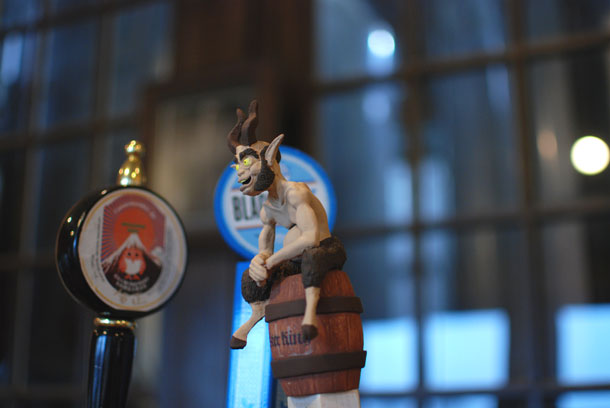
Tap handle at Jester King Brewing

Jester King Brewery is featured in the Food Republic story. Almost two million people live in the Austin area, so this it not exactly out of the way compared to the next two breweries, but it far enough from town to shift gears.

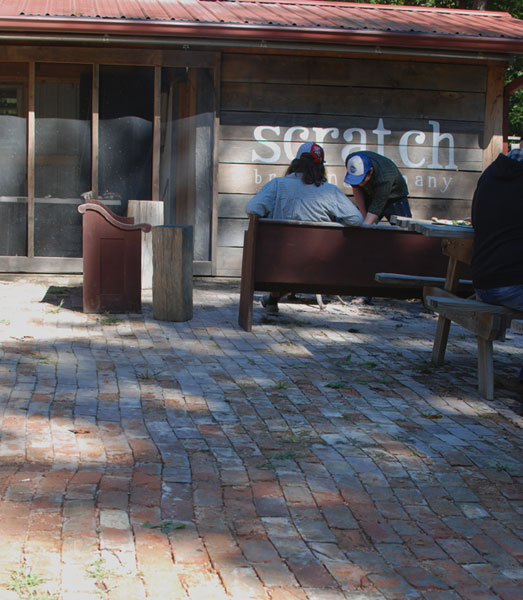
Patio at Scratch Brewing

Scratch Brewing in southern Illinois — it is as cool as it looks in this video. Stick around for the discussion of Paw Paws. The brewery is located on the edge of several acres of woods, the beers made with both foraged and cultivated ingredients, many of the latter grown beside the brewery.

Piney River Brewing - inside the barn

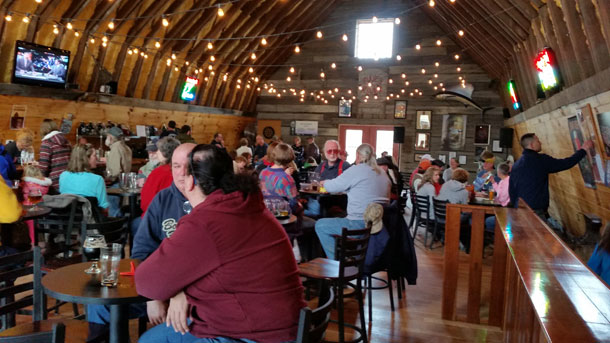
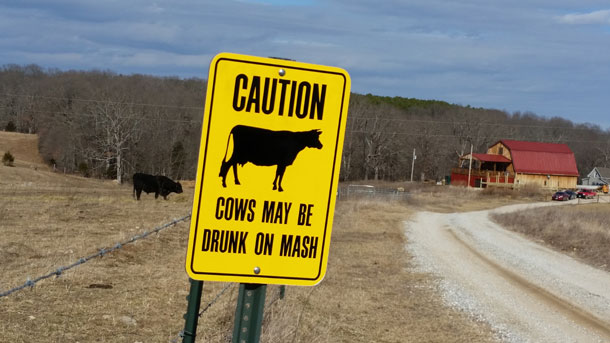
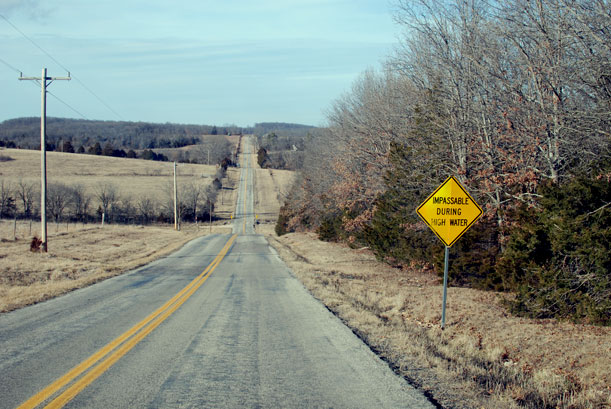
When you get to the sign that says something about a gravel road two miles ahead you know you are getting close to Piney River Brewing, about an hour south of Rolla, Mo. The brewery is located in a refurbished barn (I posted a picture of the outside a few weeks ago). “Farmhouse ales” are not part of the regular lineup, but some beers are made with local ingredients. They are celebrating their fourth anniversary tomorrow, should you be in a mood to drive on a few gravel roads.

Dave Logsdon, Logsdon Farmhouse Ales

Dave Logsdon (above) and Charles Porter brew Logsdon Farmhouse Ales in the barn on Logsdon’s 10-acre Oregon farm where he started Wyeast (which he sold in 2009). The farm is about a 20-minute drive south of Hood River, where Logsdon will open a tasting room in May. There are cherry trees, friendly animals and a splendid view of Mount Hood.

Dave's BrewFarm, the brewery system

Dave’s BrewFarm in Wisconsin, about an hour east of the Twin Cities, is still for sale. For a half million dollars you get this seven-barrel brewing system, a 10-gallon pilot system, a house to live in, a 35-acre farm (most of it to be rented to local farmers), a half-acre vegetable garden that could be expanded, a 20kW wind generator (as well as geothermal for heating and cooling), a pole barn and greenhouse. And very nice views. Dave Anderson and wife open the tasting room, basically inside the brewery and below the living area, about twice a month. His beers include some with ingredients from the garden and some with yeast sourced from Belgium. “(It) expands what beer can be and maybe (is about) what it was,” Anderson said.