 Yesterday’s beer word of the day was lactobacillus (as in those gross beer lines in Milwaukee).
Today’s is Cicerone.
And the two are related. I was going to wait a few weeks before writing about the Cicerone Certification Program Ray Daniels is launching. But in the wake of the Milwaukee story, and comments that followed about properly cleaned glassware as well as lines now seems like a good time.
First the disclaimer. Ray is a friend of mine. That doesn’t make the program any less or any more worth writing about. I think it will be interesting to discuss it with him after he’s had a chance to introduce the idea at the National Beer Wholesalers Convention in a few weeks and later at the Great American Beer Festival. I will and I will report back.
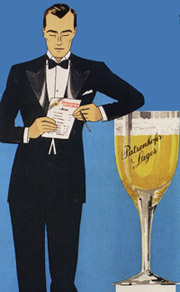
Returning to the beer word of the day. Until it gets more traction in the beer community most people are going to find it easiest to consider Cicerone a synonym for “beer sommelier.”
That would miss the point, which is addressed right at the freshly minted website.
How is a Cicerone different from a Beer Sommelier?
A Cicerone is a tested and proven expert in beer while beer sommelier is a self-designation that can be adopted by anyone. Because there are no criteria for the title of beer sommelier and because those who use the title have not subjected their knowledge and skills to an independent examination, consumers and employers can’t be sure just what a non-certified beer server knows or how they treat and serve the beer.
And even though certified sommeliers do undergo rigorous testing – astonishingly demanding at the highest levels – and are supposed to be expert in “wine, spirits and other alcoholic beverages” there’s just a bunch of stuff in the Cicerone syllabus they’ve never seen.
Back, one more time, to the word itself. Ray has bent the meaning of a word not often associated with beer so that it has – or will have – a beer meaning. That’s a good thing. We’ve struggled here before with the term beer sommelier so let’s go with something entirely different.
This isn’t a matter of beer following wine, but of the beer taking a step forward.
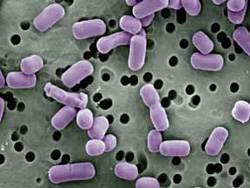 But this will have repercussions in craft beer land because the “dirtiest” beer the reporters found came from a brewpub and the second dirtiest was another “microbrewed” beer. Both contained large amounts of lactobacillus (left), bacteria that produces lactic acid, souring a beer’s flavors and smells. It is the same microorganism responsible for spoiling milk.
 Rick Lyke has the recap on the