Beer links, musing 05.01.17: Blue collars & beer

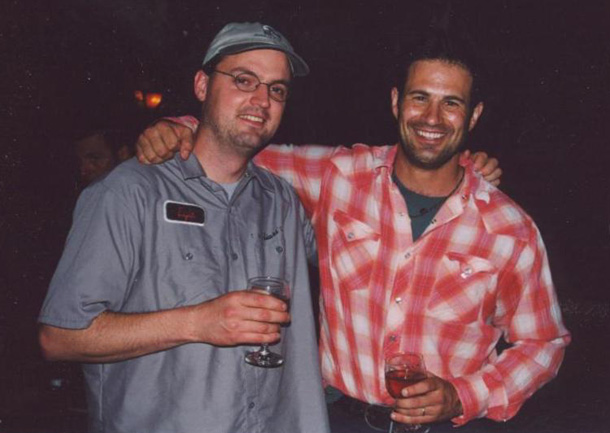
Vinnie Cilurzo, Sam Calagione

Beer and Blue Collar Cities.
A scholar somewhere is probably getting close to publishing a related thesis. The premise of “working cities” is tricky, because weren’t all metropolises working cities when they were born? I’m not sure I ever thought of Chicago as a glamorous city (or to lean on Carl Sandburg: Hog Butcher for the World/Tool Maker, Stacker of Wheat/Player with Railroads and the Nation’s Freight Handler/Stormy, husky, brawling/City of the Big Shoulders) but the yuppie/hipster and beer question question Jeff Alworth poses continues to be provocative.

In 1985, Philadelelphia Inquirer food editor Gerry Etter wrote, “Today, beer is invited everywhere. It hobnobs with vintage wines and attends formal parties, it slides effervescently into crystal glasses held by long-gowned hostesses.” This caused another writer for the Inquirer to counter, “I’ve never hobnobbed in my life (and if I did, it was only once and with a consulting adult), and I don’t intend to start now. One doesn’t hobnob while drinking beer, one shoots the bull.” Thirty years later this has not been resolved.
Read more

The Session #123: CyberBrew

The SessionHost Josh Weikert has announced the topic for the 123rd gathering of The Session will be CyberBrew – Is the Internet Helping or Hurting Craft Beer?
Ocassionally somebody will point out that these days a growing number of consumers never suffered through a time they couldn’t order flavorful beer. And, of course, the internet has always been a part of their lives. This leads to Weikert’s basic question: How is beer drinking/brewing different in the internet age, and how is the internet changing the way brewers and craft beer drinkers do business?

He suggests several, optional of course, topics:

– Marketing beer in the internet age
– The astounding influence of beer bloggers to make or break breweries (just kidding, but seriously, what’s the effect of all of this quasi-journalistic beer commentary on the drinking and brewing public?)
– How are beer reviews (expert and mass-market) affecting what gets brewed and drank?
– Are beer apps for tracking and rating overly-“gamifying” beer (or does that make drinkers more adventurous)?
– Just how fast do aleholes on message boards and elsewhere turn off prospective craft beer enthusiasts?

Post a Session contribution May 5 and leave a comment to be included in the post-Session roundup.

Beer links, musing 04.17.17: Categories vs. appellations

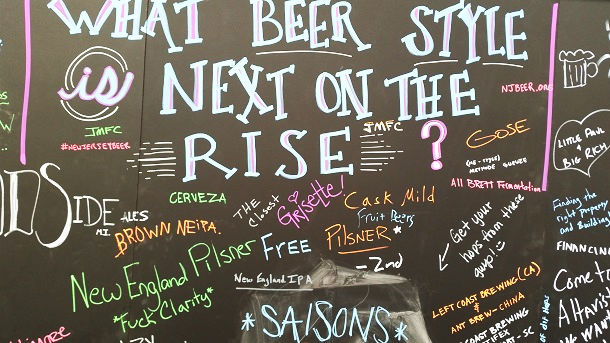
What's the next beer style on the rise? CBC 2017Monday musing and linking began in 2008 as a way to stay in touch during our semi sabbatical, but there hae often times I am not sure what reality I am in touch with. So rather than force the issue, next Monday there will be no links because I will be in Brazil. And I understand that because most of this week’s links were collected while I was in the midst of the rather insular experience of the Craft Brewers Conference they might look different in bright sunlight.
Gonzofest literary contest winner: The Great American Smoker.
Larry Bell said Monday he’s not sure when he last missed a Chicago Cubs’ home opener (which was Monday), but he thought it was important to be at CBC even though the company hums along fine with a minimum of intervention on his part. There are a lot more parties at CBC (and the Great American Beer Festival) these days, bigger, sometimes more lavish, more everything. Well, maybe not more fun. [Via Leo Weekly]

Read more

Monday beer links: ‘Nonsense; unrelenting nonsense’

MONDAY BEER AND WINE LINKS, MUSING, 04.10.17

FRESHNESS: Can we stop?
“Except it is nonsense; unrelenting nonsense. Suddenly we’re drinking beers unprepared, unconditioned and unfit for consumption. And we’re lapping it up; exclaiming the virtues of de-malted hop water as if the Ancient Babylonians had it wrong from the beginning. It is as though beer only needed one added ingredient aside from water – those green leafy cones – and that the fermentation stage was never an added necessity. Alcoholic leaves became the future of beer; as if yellow bananas were now no good and the bitter skin tasting unripened green variety were preferable.” [Via Beer Compurgation]

In Praise of Budweiser.
This is not click bait. “I didn’t want to be challenged, I didn’t want to prove my craft credentials and feel worthy of drinking a beer, I didn’t want to wrap my head round a muddle of flavours and aromas that may or may not have been intentional. I wanted a lager that was expertly brewed, technically solid, and through which quality brewing science shone, and this was that beer in that moment.” [Via Fuggled]

Read more

Significant beer digits iv

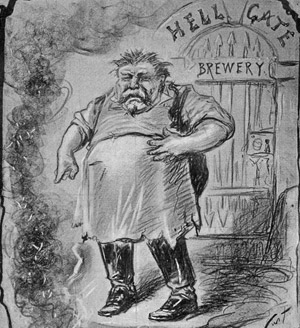
Hells Gate BreweryThe rate at which exotic, artisanal, expensive beer sales are growing may have slowed, but it’s not clear when brewery openings may. Bart Watson’s string of tweets Monday made that clear, beginning with this: “The new TTB license data has all sorts of jaw dropping stats. Take NY – now has 420 licenses (#3 in absolute terms), more than US until ’93.”

Licenses do not always translate into operating breweries (of course). The final 2016 numbers are not in, but in 2015 there were 208 craft breweries in New York and they brewed 1,086,718 barrels. Folding in production at Genesse/North American breweries triples the total, but it still doesn’t match production almost 140 years ago. In 1879 New York’s 365 breweries produced 3,980,716 barrels. At the time the state had a population of not quite 2 million; now it has 20 million residents.

George Ehret’s Hell Gate Brewery in New York City was the largest brewery in the country in 1879, selling 180,152 barrels. Missouri and Wisconsin would soon become brewing centers, but at the time New York ruled.

In fact, New York City breweries produced more beer than any other state, with 78 breweries making 1,894,668 barrels, and 45 Brooklyn breweries 544,896 more barrels. NYC had 13 breweries that sold more than 50,000 barrels and an additional 21 that brewed at least 20,000.