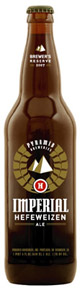
 Just when you thought it was safe to go into the style pool again . . .
Today a press release from Pyramid Brewery announces the introduction of “Imperial Hefeweizen, the first in a line of new limited edition, specialty beers known as Pyramid’s ‘Brewers Reserve.’ ”
This on the heals of a loud discussion at Seen Through a Glass about Samuel Adams Halltertau Imperial Pilsner.
From the Pyramid press release:
“Pyramid pioneered the wheat beer market back in ’85 with the first year-round wheat beer brewed in the U.S. since prohibition and soon followed it up with our American style Hefe Weizen. Now we’re taking that wheat beer tradition one step further by introducing one of the first, if not the first, Imperial Hefeweizens brewed and distributed in the U.S.,” said Art Dixon, Seattle Head Brewer for Pyramid Breweries. “Our team is truly pumped to feed our passion for wheat beers in this new select Brewers Reserve release.”
Pyramid’s new Imperial Hefeweizen, like our flagship Hefe Weizen, is a smooth, unfiltered ale, but also features a pleasant hop flavor and a more full-bodied and robust taste. The limited edition ale is brewed in small batches of less than 120 barrels using the finest West Coast ingredients, combining 60% malted wheat with Nugget and Tettnang hops for a robust, yet surprisingly refreshing taste. Pyramid Imperial Hefeweizen has an alcohol by volume level of 7.5%.
“Beer aficionados are in for a one-of-a-kind taste experience with our new Brewers Reserve beers,” said George Arnold, Master Brewer for Pyramid Breweries. “Starting with our inaugural Pyramid Imperial Hefeweizen, these limited edition beers are specifically designed for those who want to take their craft beer experience to the next level.”
I don’t think everybody needs to get their knickers in a knot because Pyramid has invented this term (notice, I don’t say style). My beef with it would be that the name doesn’t tell me what this beer might taste like.
Let’s go back to Imperial or Double IPAs, which arguably started this naming trend a dozen years ago. The first was called Double IPA and as a group of generally similar beers emerged mostly West Coast (and mostly Southern California) brewers suggested it had become a new and definable style. This took several years, and I’ve already written about it.
A few breweries have since introduced beers they described as imperial pilsners (lower case intended), sometimes using those words as part of a brand’s name. I’m OK with that. It generally tells consumers about the beer – lots of pilsner malt, lots of hops, little (should be no, but life isn’t that good) fruity ale flavors. Just because they use the term doesn’t mean it ends up being a “style.”
(Maybe I’ve spent too much time in the company of Belgian brewers, but my interest in arguing about styles has seriously waned of late. I think the BJCP Guidelines are excellent for what they are intended – giving homebrew judges a blueprint for fairly scoring beers. I use them the several hours a year I judge homebrews. I don’t consult them to decide if I like the beers I otherwise drink.)
I had planned to write about Samuel Adams Halltertau Imperial Pilsner by now. Not so much to “evaluate” the beer as to discuss some technical hops stuff (after all, I am a geek) and about the beautiful Halltertau Mittelfrueh hop that the beer showcases. Other items to post here and other work got in the way, but soon, maybe tomorrow I will find time.
Still I’m not going to write about it as a “style.” It’s not. Maybe it will be some day, though I doubt it.
And imperial hefeweizen? It means nothing. In America hefeweizen tells you what about a beer? Go buy a bottle of Pyramid Hefe Weizen or Widmer Hefeweizen. Now find some Flying Dog In-Heat Wheat. Got some sorting out to do on the non-imperial stuff, don’t you think?
Pyramid is simply offering a clue about one beer. I lied when I typed I had no idea what Pyramid’s imperial might taste like – I expect it would be a bigger, bolder version of Pyramid Hefe. I understand they want the people who like that beer and who want to try something bigger and bolder to have a choice they sell.
I figure they aren’t really out to invent a new style. If they are then they are idiots.
 Judith Bennett writes that women brewers were so common during the 16th century that in northern England the term brewster was preferred for anybody who made beer, male or female.
 If you’ve been following Teri Fahrendorf’s brewery trip across America (and if not, why not?) you know she’s assembling a
  A trifecta today of stories about the role breweries play in communities: