New wave brewing or natural progression?

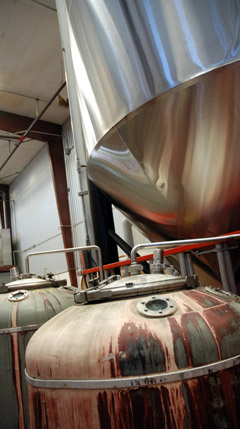
Grundies at Firestone WalkerMark Dredge poses a question at Pencil & Spoon that’s a variation on one discussed at length in American blogs, but adds a new perspective when asking “Are we in a New Wave of brewing?”

He starts with film to make his point, specifically the French Nouvelle Vague, quickly moving on to “small groups of brewers, pushing each other forward, exciting and exuberant, articulate and literate in the language of beer, each with their own authoritative stamp which makes the drinker know that they’ve just enjoyed a beer by that particular brewery.”

Of course what’s new in the UK isn’t necessarily new to us.

Dogfish Head are at the forefront of this ‘movement’ in the US and always have been – they are the Jean-Luc Godard of beer. The beer itself, the brand, the marketing, it all points towards a New Wave. Their 60, 90 and 120 Minute IPAs use the innovative technique of continual hopping (see: Godard’s jump cuts).

OK, he’s got to work a little on his history. While continual hopping makes a good story and good beer the real innovations in hopping — embracing true bitterness, making massive late hop additions for more flavor, dry hopping, etc. — started in California before Sam Calagione opened Dogfish Head Craft Brewery in 1995.

And California brewers aren’t given up the hop crown easily. Just look at the IPA, Double IPA, Imperial Red and similar category results from the recently concluded Great American Beer Festival competition.

Beyond that many good questions posed (as well as in the comments, be sure to make it to Zak’s). Right to the end: “Are we in a New Wave of British and world brewing? Or is this whole thing just the natural progression of brewing along its own course?”

Perhaps it’s possible to answer yes to both.
 

My ‘team’ and I are ready for GABF

This question isn’t too tough, since I’ve already mentioned the Great American Beer Festival Beer Mapping Fantasy Draught, but what do these breweries have in common?

The Lost Abbey
Pizza Port Carlsbad
Snake River Brewing
Flying Dog Ales
Southampton Publick House
Saint Arnold Brewing
Marble Brewery
Il Vicino Brewing

Yep, they are members of my “team.” They also happen to be breweries I’ve visited. A little tricky because I visited Frederick Brewing before before Flying Dog bought the facility. So I’ve been to what was the Flying Dog brewery in Denver and what would be the Flying Dog brewery in Frederick. Got that?

Just arrived in Denver and will now turn my attention to work and beer. The order may change throughout the day.


Union Jack IPA back to back?

One more quick look into the Great American Beer Festival judging records. I could waste a lot of time in the archives. For instance, I’ve pointed out before that Blind Pig Double IPA and Goose Island Bourbon Barrel Stout both made their first GABF appearance in 1995, laying the groundwork for what are now stand-alone categories.

But at the time it seemed at least as bold that Kinney Baughman from Cottonwood Grill & Brewery in North Carolina brought his “Belgian Amber Framboise.” The beer took a bronze in Belgian-style Specialty behind Celis White and Thomas Kemper White. Oh, the memories.

Back to what I was looking for. When I posted the 1987 results Rick Sellers commented on Twitter that Rubicon in Sacramento won the first gold in India Pale Ale, which did not become a category until 1989. When I looked I noticed Rubicon won the first two. So I wanted to see if that ever happened again.

IPA has become the most hotly contested category, with more than 100 entries every year — even with the addition of Double (or Imperial) IPA and American Strong Pale Ale (Avery IPA won that one year, just so you know what ends up competing) categories.

These days it’s rare for breweries from the same state to win back-to-back, but in the 1990s Hubcap Brewery & Kitchen in Dallas, Texas, won three years out of four. Hubcap was a spinoff of a brewpub in Vail, Colorado (as you might tell from the beers names). Both are long gone. My notes indicate we had the IPA in 1993 and liked it, although I honestly don’t remember it at all. Anyway, I’m a bit confused because in 1992 brewpubs weren’t yet legal in Texas. This is a bit of beer history that needs to be tracked down before it’s completely lost.

Meanwhile, here’s the list of IPA gold medalists:

1989 – Rubicon IPA, Rubicon Brewing, California
1990 – Rubicon IPA, Rubicon Brewing, California
1991 – Banty Rooster, Seabright Brewing, California
1992 – Solstice Ale, Hubcap Brewery & Kitchen, Texas
1993 – Renegade Red, Estes Park Brewing, Colorado
1994 – Vail Pale Ale, Hubcap, Texas
1995 – Dig D’s Vail Pale Ale, Hubcap, Texas
1996 – Ponderosa IPA, Prescott Brewing, Arizona
1997 – India Pale Ale, Marin Brewing, California
1998 – Pike IPA, 5280 Roadhouse & Brewery, Colorado
1999 – Racer 5 IPA, Bear Republic, California
2000 – Telemark IPA, Backcountry Brewery & Restaurant, Colorado
2001 – Tumblewood IPA, Sleeping Giant, Montana
2002 – Drake’s IPA, Drake’s Brewing, California
2003 – Hoptown IPA, Hoptown Brewing, California
2004 – India Pelican Ale, Pelican Pub & Brewery, Oregon
2005 – Castle Rock IPA, Santa Barbara Brewing, California
2006 – Hophead Imperial IPA, Bend Brewing, Oregon
2007 – IPA, Odell Brewing, Colorado
2008 – Union Jack IPA, Firestone Walker, California


When the GABF had 12 categories

Not surprisingly, chatter about the Great American Beer Festival runs rampant in the world I occupy, and now particularly on Twitter. Just to be clear, I know full well Denver will not be the center of the beer universe this weekend.

There isn’t one.

But GABF has my full my attention, and in doing a little research for stories I’ll be working on this weekend in Denver I was looking at the 1987 judging results. Although the festival began in 1982 the blind judging competititon did not commence until 1987, in all of 12 categories (compared to 78 today).

Here’s who won gold:

Ales – Big Foot Barley Wine Style Ale, Sierra Nevada Brewing
Alts – Chinook Alaskan Amber, Alaskan Brewing
American Cream Ales – Little Kings Cream Ale, Hudepohl-Schoenling Brewing
American Lagers – Koch’s Golden Anniversary Ale, Genesee Brewing
American Light Lagers – Leinenkugel, Jacob Leinenkugel Brewing
Bock/Doppelbocks – Chesbay Doppel Bock, Chesapeake Bay Brewing
Continental Amber Lagers – Golden Bear Dark Malt, Thousand Oaks Brewing
Continental Pilsner – Samuel Adams Boston Lager, Boston Beer Co.
Porters – Great Northern Porter, Summit Brewing
Stouts – Boulder Stout, Rockies Brewing
Vienna Style Lagers – Vienna Style Lager, Vienna Brewing Co.
Wheat beers – Edelweiss, Val Blatz Brewery

A few of those beers will be contenders to win this week.


Is your beer bucket list up to date?

Rick Lyke pointed out earlier this week that Amazon is already taking orders for 1,001 Beers You Must Taste Before You Die — a book he, I and many others contributed to — although it won’t be available until March.

Turns out there are 1,000 beers to try before then. Ben McFarland’s World’s Best Beers: 1000 Unmissable Brews from Portland to Prague goes on sale this week in the UK, although it’s not clear when the book will be available in the United States.

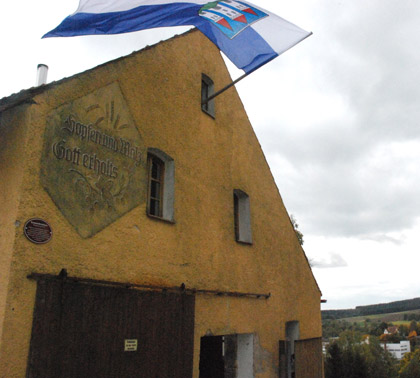
If you care about what beers might be listed — SPOILER ALERT! — you can sneak a peak by looking inside the book, going to the index and clicking through to the list of featured beers. In fact, I did, read the whole thing. Was happy to find beers like Kout na Šumave 12° Svetlý Ležák (Czech Republic) and Zoigl from the community brewhouse in Neuhaus (in Germany, pictured here).

Zoigl Kommunaibrauhaus Neuhaus

Quite honestly, I don’t much care what is and isn’t “unmissable.” I’ll order the book (£16.25 from UK Amazon, so I’ll wait for US shipping) because McFarland is an entertaining writer.

Perhaps you are thinking what’s with all these books, recently Beer: Eyewitness Companions and The Beer Book listing (together) thousands of beers, out of the UK? Don’t US publishers know we live in the country that’s supposed to be at the heart of this world wide beer revolution?

One is. Andy Crouch just completed the manuscript for Great American Craft Beer on Friday. Not clear when that might be published, but I’m more curious how many beers are included. An update from Andy: the bock includes about 400 individual reviews at the moment, a number that may go up though he hopes not.