Local beer: 63105

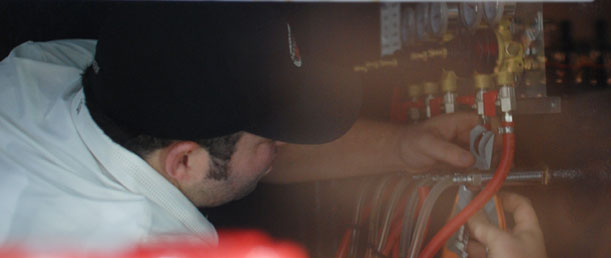
Beamer Eisele of Modern Brewery hard at work

More than an hour into the Modern Brewery’s launch party Friday at Craft Beer Cellar Clayton CEO/president Beamer Eisele was still in the store cooler, struggling to get a third keg of the brewery’s beer online. He’d already been back to the brewery to pick up the proper equipment.

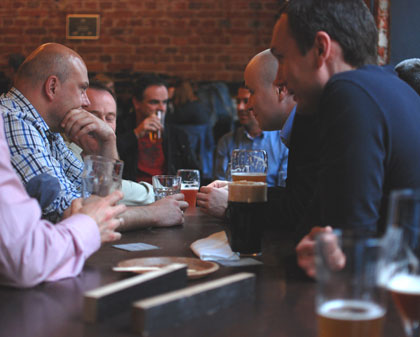
“Now I can enjoy the party,” he said after the final beer was flowing. A few minutes later he and partner Ronnie Fink (that’s Eisele above and Fink below) looked at the line for beer at the rather small tasting bar in the back of the store and at friends and CBC customers pretty much filling up the place. Eisele sighed, then headed back to the brewery, this time to pick up another keg.
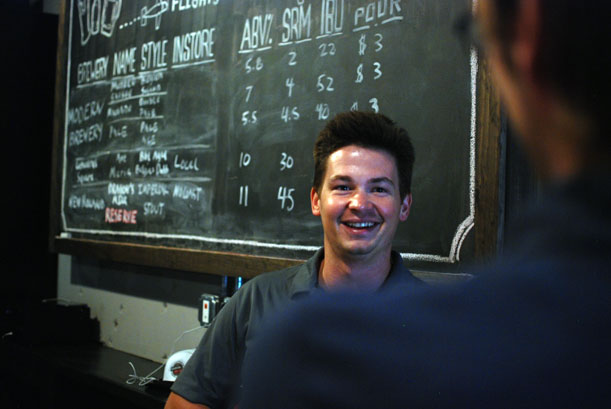
Ronnie Fink of Modern Brewery talks with a customer

Now that Modern Brewery is officially open there are four breweries within four miles of our house. When we moved to Clayton (ZIP Code 63105) three years ago there was one.

Clayton CBC, the western-most outpost of a chain that started in Massachusetts, just opened in May. It’s a 15-minute walk from there to The Wine and Cheese Place, the best retail store in Missouri, according to Rate Beer members and many others. For its weekly tasting Friday, Wine and Cheese was pouring Cathedral Square Ave Maria Bourbon Barrel Aged, Alpha Brewing Lapsided, Summit Brewing Sparkling Ale, Brasserie La Goutte D’Or La Mome Saison Orientale, and Brouwerij Verhaeghe Barbe Ruby Kriek.

Last month, Book & Bailey wrote that “For some, local is enough.” Local is important to me. It really does make a beer taste better (no I’m not suggesting it is something that might be replicated in a blind taste test). I’m pretty sure that it is “enough” to build a business on, but that “enough” must includes a decent level of skill in the brewhouse. There are too many quality beers, local and not-so-local, close at hand not to notice when others don’t measure up.
When cultures collide

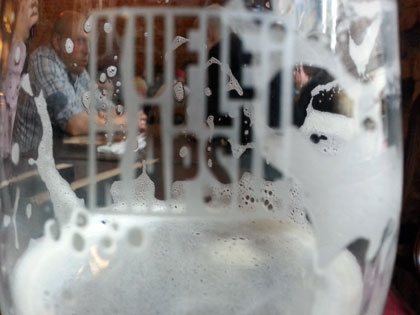
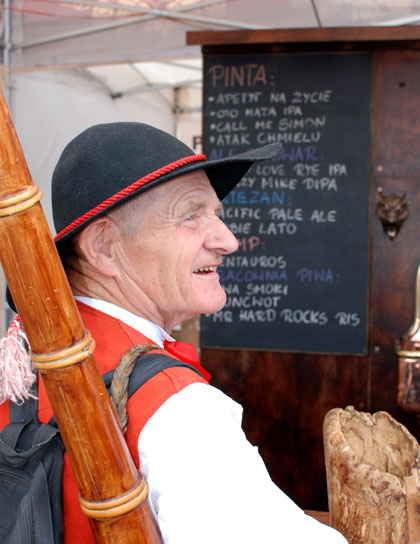
About to order a beer at Festival Birofilia

Meant to post this photo taken last month at Festiwal Birofilia in Zywiec right after returning home from Poland, but failed.

It was a hoot eavesdropping on the conversation, all in Polish and pretty much none of which I understood except the part where the person selling beer tried to teach this fellow how to say “ee-pa.”

The look on his face after he tried the beer suggested he wished he’d made another choice.

Friday beer: Two Jokers Double-Wit

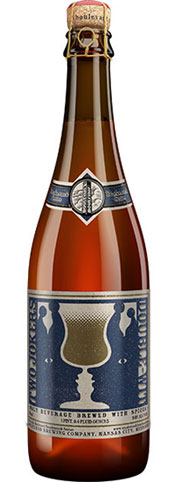
Boulevard Two Jokers Double-WitSo you bought the first edition of “1001 Beers You Must Taste Before You Die” and worked your way through the first 1,000 before you realized that blankety-blanket so and so Stan Hieronymus* suggested a beer you couldn’t find. Now you can die in peace — Two Jokers Double-Wit is back.
It would seem not everybody was as impressed with Two Jokers as I was when it was released in 2009. As a result, Boulevard Brewing did not brew it beer in 2012, or 2013. It’s back now, as a seasonal, familiar and convivial. At the risk of repeating myself, here’s what I wrote in 2009:

“It makes sense that Boulevard Brewing, located in America’s bread basket, would include wheat as a major ingredient in seventy percent of the beers it brews. Boulevard Unfiltered Wheat, a 4.4 percent beer perfect for humid nights in Boulevard’s home of Kansas City, accounts for most of that, but the brewery makes a full spectrum of wheat-based beers, including Two Jokers Double Wit. ‘The beer and the name are based on duality,’ said Boulevard brewmaster Steven Pauwels. ‘On one side you have the old-school way of making a tart white beer while on the other side you have the U.S. craft beer movement to make everything bigger, more complex. This beer is an approach to overcome these differences.’

“He uses what brewers call a ‘sour mash’ to create much of the tartness in this beer, a method employed in Belgium at the beginning of the twentieth century instead of using ‘wild’ yeast. ‘I like the idea of tartness in white beers,’ said Pauwels, who is Belgian-born and trained. ‘Nowadays we tend to over spice these beer to reach that goal, while they were pretty simple beers at that time (in the nineteenth century).’ The recipe for Two Jokers includes both malted and unmalted wheat and a bit of oats. It is spiced with coriander, orange peel, lavender, cardamom and grains of paradise, but none in quantities that make them easy to pick out.

DRINKING NOTE
Pours hazy orange with an off-white head. Citrus and spices jump from the glass, followed by sweet notes of cotton candy. Tart on the tongue, pleasantly grainy, with refreshing orange and lemon zest flavors. Complex and lively.”

*****

* Full disclosure: I was paid to contribute 51 entries to the book. So Two Jokers and I have a working relationship, even following each other on Twitter.

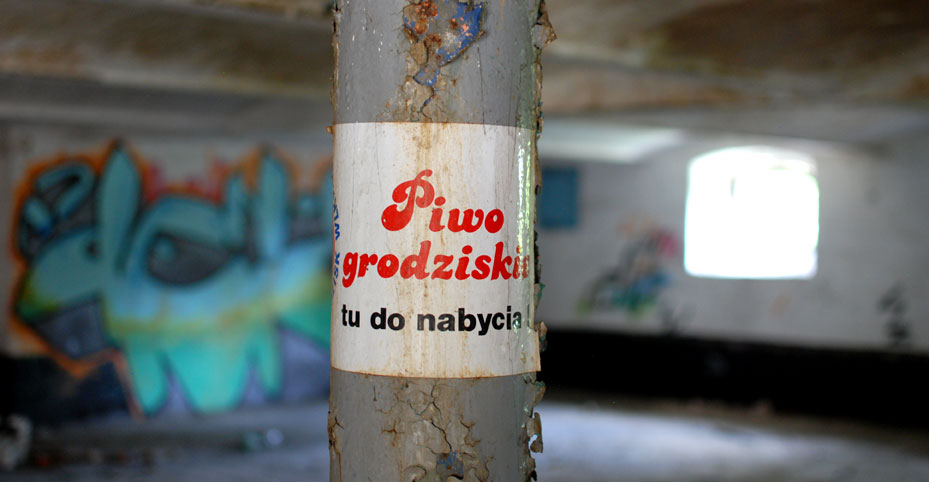
Grodziskie available here

Grodziskie available here

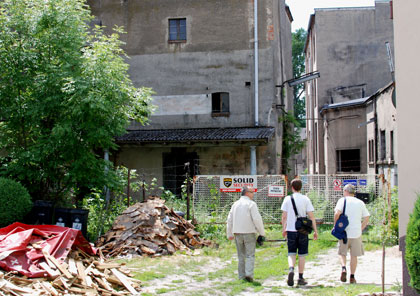
A sign* on a pillar in what was the malt house for the last brewery to operate in the Polish town of Grodzisk Wielkopolski indicates Grodziskie beer may be purchased here.

Well, not quite yet. However, renovation has begun at the complex, with plans for brewing to resume early in 2015.

A former and future Grodziskie brewery

Daria and I visited the site last week along with Jan Szala, a member of the commission formed to revive the style, and Marian Bochyński. Bochyński has the largest collection of Grodziskie breweriana of anybody anywhere. Szala was last in the buildings, where brewing ended in in 1993, two years ago. He said they looked much more like a brewery then. Today every one is basically an empty shell.

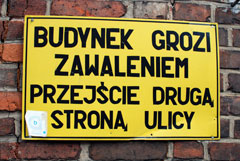
Watch out for falling brewery wallsGrodzisk, home to about 14,000 people, is totally charming. Bochyński led us past three buildings in other parts of town that were once breweries. Grodzisk had 53 at the end of the eighteenth century and still five, all much bigger and selling their beer in far away posts, at the beginning of the twentieth. The warning sign to the right — Jan explained it basically says to stand away from the building because it is in danger of collapsing — is posted on the side of one of them.
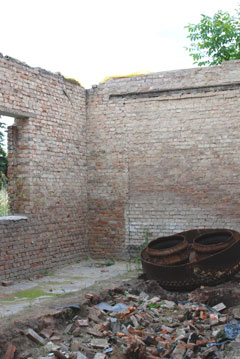
A former and future Grodziskie breweryI’m not sure standing in the middle of this brewery in waiting if it is easier to envision what it once looked like or what it will look like. Jan shook his head as we walked away, saying he couldn’t believe they’d be brewing only months from now. But it turns out he hasn’t visited Browar Fortuna, about 100 kilometers to the east, recently. There the same four principals involved in Grodzisk have modernized a regional brewery that was slowly grinding to a halt.

When they took over Fortuna, founded 125 years ago, little more than three years ago sales had shrunk to 10,000 hectoliters a year. They don’t generally talk about production figures but it seems they are on track to sell six to eight times that in 2014. Before we went to Miloslaw, I asked homebrewers about Fortuna and they said the beers tasted of iron &#151 the flavor, some say of blood, you get when you put a penny in your mouth. They need to taste the beers again. Almost bit of equipment involved in the brewing process has been cleaned up or replaced.

I have no idea if these guys will succeed selling a style of beer that died a natural death, but it’s pretty clear that what they make will be well brewed.

There’s a fascinating beer story unfolding in Poland. One that’s not just about Grodziskie and one that deserves to be told properly, I think as my contribution to “Beer Trails.” This will take some time, though not as long as rebuilding such a valuable piece of the past.

* Click on it to enlarge the photo at the top.