In this corner we have Stephen Beaumont, pointing out to us the affordable pleasures of beer. (Noted earlier in the day.)
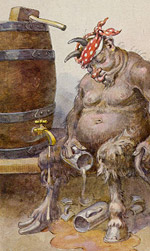 In this corner we have Mike Seate of the Pittsburgh Tribune-Review telling us that Beer snobs forget the true meaning of beer. He writes about how expensive beer he finds beer in some Pittsburgh bars and about how pretentious he views the drinkers who pay that price.
I was writing about Stephen’s post when Loren’s note about Seate’s column arrived. A few hours later when I returned to write about that topic it I saw that everybody has something to say.
– The comments at Beer Advocate had more than doubled.
– Jay Brooks weighed in, admitting “I should be ignoring what he’s saying but I can’t. The bait is there and I took it.”
– Alan McLeod focused on another different bit of the colmun, writing:
So, given the concerns, is there something to the column Mike Seate wrote? Is it perhaps the case that we do not like as beer nerds to look at ourselves as beer nerds but some sort of evangelists surrounded by fools or at least the unheeding doomed? If so, what does that mean for our understanding of the meaning of what we beer nerds are doing?
Whew! Alan, that’s a bit of self analysis I need an expensive beer or to in my belly to undertake.
So with all these conversations going on I’m picking just one to comment on – or not.
Back to the headline: “Beer snobs forget the true meaning of beer.” Then Mr. Seate’s conclusion that “beer is supposed to be a workingman’s drink” and that he’ll be drinking on the cheap.
So the true meaning of beer is that it is something “working class people” drink and thus it must be cheap?
That’s too silly to comment on.
Quick additions on 1/19: Quite well said by Stephen Beaumont, and a solid discussion at the Burgundian Babble Belt.
 Here’s another prediction for 2007 I should have made: Vintage beers will command more attention.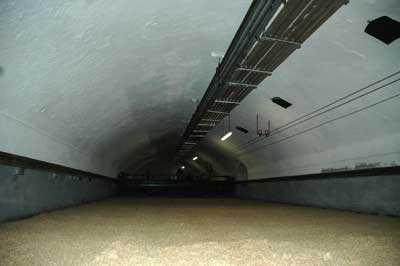
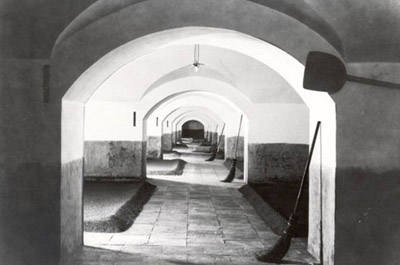
 (Given that eyes adjust better to dark conditions that my camera, the photos here don’t quite portray what I saw. The top one shows the hall, the one to the right the machine from a long ways away with the light “turned up,” the next a chalkboard that tracks the status of a batch of malt. The image at the bottom shows that Augustiner has left some tradition behind – picturing when malt was turned by hand.)
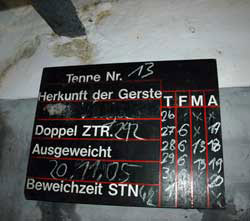 Augustiner is the last brewery in Germany with its own malting facility, and its floor-malting is one of only two left in the country. Augustiner bills itself as the “keeper of the tradition” but this is about more than tradition. Most agree that floor malting produces superior malt. By maintaining its own maltings Augustiner also has the option to pick from different barleys, sometimes using older varieties of that malt suppliers no longer offer.