A few things you might have missed last week:
– The held the Iron City Brewing auction Friday and yesterday in Pittsburgh.
– Granted Equity For Punks might be important to the future of BrewDog, has led to considerable discussion about the value of the company, and certainly reminds us that no matter how much fun brewers appears to be having they are involved in serious business.
But Pete Brown points out that there’s investing and there’s something else:
But that’s not the point. I doubt Brew Dog will sell all 10,000 shares, but the people who are buying are buying something more than a 0.0009% stake in the most exciting brewery in the UK. The people buying are people who don’t normally buy shares. They’re buying this share because they want to align themselves with something interesting and iconoclastic, to be part of an adventure. Think of it less as a share, more like a T-shirt or badge saying “I’m one of these cool, interesting people who’s part of this cool, interesting thing.”
BrewDog has priced those shares at £230, which right now equates to $375.
– If you are watching the second NFL game of a doubleheader today (or about any other televised sporting event that ends as afternoon turns into evening east of the Mississippi) you might hear the announcers say to stayed tuned for something upcoming immediately (or maybe local news will be thrown in) “except on the West Coast.” In fact, that’s “except on the West Coast and in the Mountain Time Zone.” But because, according to Google answers, little more than 5% of the voting population lives in the Mountain Time Zone we remain pretty invisible. That’s OK; we don’t want anybody else living here.
Still, it made me smile to get the press release from Odell Brewing about a new beer called Mountain Standard. It’s made with Cascade and Chinook hops grown on Colorado’s Western Slope.
“We’ve experimented with locally grown hops for smaller batches brewed on our pilot system, but haven’t been able to find enough hops to extend the beer beyond our tap room,” Brendan McGivney, head of production, said for the press release. “This year we sourced 400 pounds of hops from the Rising Sun Farms in Paonia, Colorado. We plan to brew one batch every year with each harvest.”
Bottled in 750 ml cork and cage finish bottles, Mountain Standard joins Bourbon Barrel Stout and India Barleywine as part of a new line of single serve offerings. The beer will retail for $14.99 to $15.99 per bottle, and is available in the brewery’s eight state distributor region (90% of which lies in the Mountain Time Zone).
On Nov. 2, the day after daylight savings time officially ends, Odell Brewing will celebrate the return of Mountain Standard Time with an un-corking celebration at the brewery’s tap room in Fort Collins.
– “10 worst dining trends of the last decade,” from the Chicago Tribune. Pretty pictures.
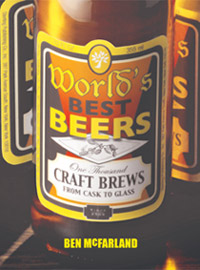
 , which I mentioned earlier this week, is a coffee table book, weighing in at nearly three and a half pounds. Although it includes an introduction to beer up front, thus qualifying as novice friendly, and a beer-and-primer apparently required in all new beer books, most will look to the 176 pages that list (disclaimer: I haven’t counted them) 1,000 beers.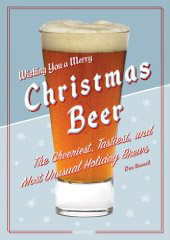
 came out last year while we were in Europe. Thus I write from experience when I suggest this is not a book you want to start reading in January, when these beers have disappeared from the shelves.