 Angelo at Brewpublic hosts The Session #62, asking us to write about “What Drives Beer Bloggers?” You’ll find more confessions there.
The about/mission page pretty much explains why this blog exists. I’m not sure you should care what motivates me to serve that mission (on at least 4.57 posts out of 10), or in fact that want to share it.
So, as is often the case here, I’ll leave it to you to connect the dots between point A and point B.
A) During our Grand Adventure in 2008 I visited Alaskan Brewing. I saw the mash filter they were in the process of installing. I pitched the story to a few beer-related publications, but nobody was interested. I thought this was one of those stories somebody should write about, so when the filter was up and running I wrote about it here.
B) On June 4, 1968, I fell asleep listening to a Pittsburgh radio station broadcast Los Angeles Dodgers pitcher Don Drysdale’s sixth consecutive shutout. I awoke to the news that Robert Kennedy had been shot later that night in Los Angeles. As I did six mornings a week that summer I headed to the offices of The Champaign-Urbana News-Gazette.
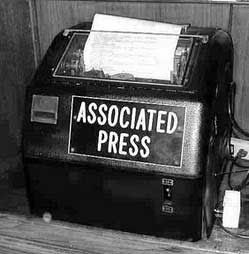 I liked to get there by 5:30, so I could pull the paper off the teletype machines before the “wire editor” (his title) arrived. He tended to be way too slow sorting out the sports stories, because he’d probably rather have been working in the sports department just as much as I’d rather have been working in news. Plus he was an alcoholic and I didn’t much care for the phlegm that ended up on the paper he passed along.
On this day, though, I just wanted to be able to stand in front of the machine and watch it type out the news one letter at a time, before anybody else in town would read it. This was news, to me more real than watching television replays of the shooting itself, because it was “real time.”
Beer is not that important. I understand that. I constantly remind you of that. But there are times when I learn something interesting enough I can’t wait for that clattering machine to bang out the next sentence. This blog gives me a place to pass along those stories. Maybe I’m just a beer gossip.1
1 I just checked and the domain beergossip.com is taken, but thebeergossip.com is available.
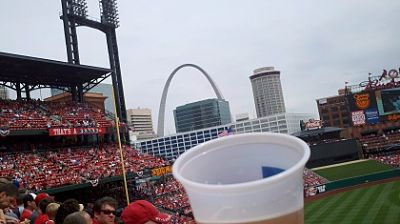
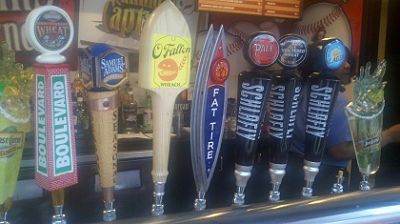
 Two suggestions on Session Beer Day: