Significant beer digit

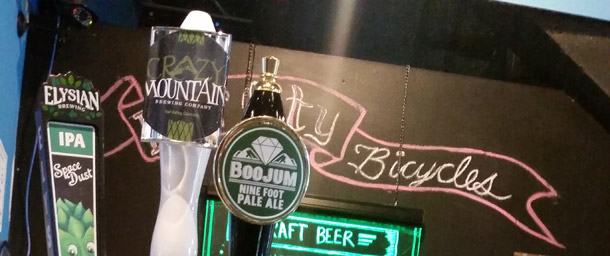
Crazy Mountain beer on tap in Asheville, NC

Reading Bryan Roth’s story about American beer sales abroad in the latest (37.6) issue of All About Beer magazine this fact about Crazy Mountain Brewing in Colorado jumped out at me.

Another fast-growing market is South Korea, where (Kevin) Selvy sells about 360 barrels a month and is hoping to increase that to 480 in early 2017.

Four hundred and eighty barrels a month would be 5,760 a year. To provide some context, sales in South Korea alone (not even its best foreign market) would have made Crazy Mountain the 184th largest microbrewery in the United States in 2015. There are, of course, 176 larger regional breweries, including Crazy Mountain, and then some rather big breweries not classified as craft. But Crazy Mountain Korea would easily be larger than more than 90% of the 5,000-plus breweries in the U.S.

Whither the brewmaster?

The other day Zymurgy editor Dave Carpenter wrote about “Five Beer Clichés We Need to Stop Using,” and this was the first.

Brewmaster: I’m not against the word ‘brewmaster’ per se, just its liberal use. All brewmasters are brewers, but not all brewers are brewmasters, just as not all cooks are Michelin-starred chefs. The mere act of upgrading from 5-gallon homebrew batches in a garage to 5-barrel commercial batches in a larger garage does not automatically a brewmaster make. Head brewer? Sure. But let’s use the title ‘brewmaster’ more sparingly.

I was thinking the “how do you define a brewmaster?” topic had come up here before, but if so I’m not very good at figuring out the archives because I couldn’t find it. There was something Garrett Oliver said in 2013 at the European Beer Bloggers Conference.

Read more

Monday beer links: Diversity, blogs through the ages & GMO questions

MONDAY BEER & WINE LINKS, 12.12.2016

Is Craft Beer Still Too White?
[Via Vinepair]
Addressing Diversity in Beer: A Q&A with Julia Herz.
[Via This Is Why I Am Drunk]
Addressing Diversity in Beer: Seeking Action.
[Via This Is Why I’m Drunk]
Opinions about this filled my Twitter feed last week. Among suggestions was one that the Brewers Association provide scholarships to people who are not white males to attending brewing school. Nothing wrong with that idea. But the Brewers Association is, well, an association of brewing companies. One of the reasons that there are more local breweries is that they are part of communities, regularly making connections with people in those communities. Shouldn’t they reflect the, and pardon me for using this word, demographics of that community? Shouldn’t the members be allowed to hold them responsible to do that?

Hello From The Blog’s Back End – And The Road …
Alan McLeod nicely summarizes the phases beer blogging has been through, easier for him to do than most because he was there at the beginning. [Via A Good Beer Blog]

Read more

Monday beer links: Beer & weed, The Beer Monopoly, and ‘enter the chairs’

MONDAY BEER & WINE LINKS, 12.05.2016

Legal marijuana is affecting the beer industry’s memory.
Killer lead from Jason Notte: “Marijuana’s disruption of short-term memory apparently applies to the argument about its effects on the beer industry. Folks are still saying weed is bad for beer, but nobody seems to remember any of the evidence to the contrary.” And it is followed by a solid takedown of “this purple haze of half-truths” and a report from investment bank Cowen and Co. maintaining that legal marijuana is driving down beer sales. Notte concludes, “It isn’t marijuana harshing the beer industry’s mellow: It’s some harsh truths about where the industry is headed.” [Via MarketWatch]

London’s next beer revolution has begun.
[Via Craft Beer London]
Texas’ Deep Ellum Sells Stake to Storied Craft Breweries.
[Via Brewbound]
The Riddle of Scarcity in New England.
[Via All About Beer]
In the first story, Will Hawkes concludes, “The implications for independent London breweries are obvious. The advantage from being local only goes so far: those who will thrive over the next few years will do so because their beer is consistently good.” In the second, a Dallas brewery intent on growing apparently much larger, sells majority interest in the operation to an investment group. In the third, Jeff Alworth examines the choices breweries that brew passionately loved beers make related to producing and selling those beers. You may parse all this information differently. But it seems to me that stories about how many breweries is too many breweries overlook that a fundamental shift. Some owners — well, lots of them — have written a business plan based on ongoing growth. But the way some others measure success has changed, and there is room for plenty more local breweries whose founders have realistic expectations.

Read more

Monday beer links: Hop inspections, beer lists, BCS & ‘Hard Times’

ABBREVIATED MONDAY BEER & WINE LINKS, 11.28.2016

Unhappy New York Hop Inspection: 1827 to 1835.
Alan McLeod trips happily from one discovery about hop inspecting to another. A couple of passages from the 1973 edition of Steiner’s Guide to American Hops add to the conversation.

(The annual sale of hops) was greatly stimulated by a law passed in Massachusetts in 1806 providing for compulsory inspection and grading of all hops packed for export. Strict standards were set for inspection and sternly enforced with the result that Massachusetts “first sort” brand became known as the finest hops in the United States. The effects of the law were salutary. European customers insisted upon hops which had passed the Massachusetts inspection, and in consequence, such approved hops commanded a premium price.” Production grew from annual sales of 304,377 pounds between 1806 to 1815 to 595,451 between 1825 and 1835. (From History of Agriculture in the Northern United States, 1620-1863.)”

Read more