Monday morning musing: German brewers’ woes

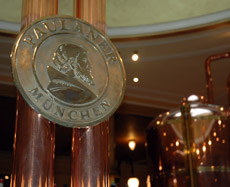
Paulander brewhouseI think I need to talk to New Glarus brewmaster Dan Carey, and finish a conversation started 11 years ago.

He was jet lagged but wired at the time, having just returned from Germany, where he bought a beautiful well-used and bargain-priced copper brewing system that would be the centerpiece of New Glarus expansion in 1997. He also looked a little sad. “We’re 50 years ahead of the Germans,” he said.

This wasn’t nationalistic boasting, a claim that American beer culture had surpassed Germany’s. This was history. He was speaking about how the number of breweries in Germany was (and still is) shrinking in the wake of consolidation. Something the United States went through during the last century.

I thought of this last week when reading stories about how German beer sales continue to shrink.

Is there an antidote? One story suggested, “Micro-Brewers Hope to Fight Sinking Beer Sales in Germany.”

What brewpub entrepreneur Oliver Lemke of Berlin has to say will sound familiar to American beer drinkers.

“There used to be 100 breweries in this neighborhood alone. They died out in the 1970s with the trend toward mono-breweries. The big breweries – for example Warsteiner or Licher – said: ‘We’re only going to make one sort of beer, a premium pilsner, and we’ll market it nationwide.’ And that inevitably leads to a dead-end. At some point, even the world’s biggest idiot notices that there’s virtually no difference between a Warsteiner and Licher.”

And also a little startling.

“The German beer drinker thinks he knows a lot about beer, but most of them know very, very, little.”

Perhaps they don’t know as much about beer as those deep into beer geekdom, but let’s be honest — they’ve still got a stronger beer culture. We talk about differences between the Northwest and the Northeast and argue about America’s best beer city (kind of silly if you let Portland, Oregon, participate). Well, they’ve got Köln and Munich and Bamberg, and scores of villages in in Franconia and . . . It is a different league.

Does that mean even more will be lost if the heartless consolidation continues? Or that the strength of the culture will keep German beer from tumbling into a monoculture as American beer did in the U.S. did during the twentieth century?

I’d like to take the optimistic view.
Why beer blogs are good even when things suck

Jens Dalsgaard puts it this way at Nanobryg: This is the end of Ølfabrikken.

Dalsgaard’s take on Gourmetbryggeriet acquiring the remaining 50% of Ølfabrikken is pretty despressing.

Look, I don’t care if I never drink another bottle of Ølfabrikken Porter (though I know just where to find several). I’m not thinking first about my beer drinking convenience. In fact, my least favorite thing about Ølfabrikken could be that the brewery ships its beer to the U.S.

That might sound strange, but (trust me, this is proof you don’t want to be living inside my head) the logic goes likes this: If they didn’t ship us beer then I wouldn’t know they made really good beer and wouldn’t care when Dalsgaard writes: “We shall see if the brand stays unchanged, but I seriously doubt it.”

You hate it that it appears what looked to be a cool little brewery is changing. One where you knew just who was making the beer and what ingredients they were using.

Without the Internet we might have ever heard of Ølfabrikken (ranked 12th in the world by Rate Beer). Maybe this has already by discussed to death at the beer sites, but I lean on beer blogs, via rss feeds, to get news like this. News I could have missed without Nanobryg.

And, yes, there is the possibility that Dalsgaard is totally off base — which is why brewers scream about “those damn bloggers” — but he’s earned my respect and will have to be proved wrong. (I hope he is, but as already noted, it can get strange inside this head; maybe I need a beer).

It will suck for drinkers in Denmark if what were beers of conviction won’t be brewed with the same character. It doesn’t make me happy knowing what I now know, but I am happy to know Nanobryg and the 193 other blogs really simple BEER syndication currently tracks are out there digging up stuff like this.

(Full disclosure: This is not intended as a shot across Alan’s bows, but his post a few days ago caused me to stop and find a silver lining in what looks like pretty sucky news.)

Gordon Biersch X 4: Compare and contrast

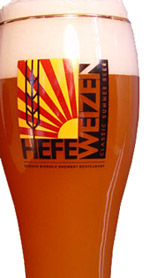
Gordon Biersch Hefeweizen“Brew” Blog reports that Costco has received label application approval to sell three beers under the Kirkland brand name.
This has all kind of implications. In brief:

– Costco is a poster child for “trading up.” You go there to buy products you are brand agnostic about in bulk (often the dependable Kirkland brand), leaving you money to spend more on those you care about. At Costco or some place else.

– In case you were napping, Costco has been fighting the three-tier system, this week suffering a setback when an appeals court overturned most of a previous favorable ruling.

– It’s the largest wine retailer in the United States. I’ve always wondered what would happen if they got equally serious about beer. Yes, Costco sells beer by the case, and I can often find a New Belgium specialty beer there as well as Fat Tire. But as well as stacks of wine at $6.99-$9.99 they’ve also two islands with wine in bins. You can spend hundreds of dollars on a bottle, but the real sport is shopping in the $11-14 range. Might they make room in those bins for a few bottles of hard-to-find beer?

All good topics for a bar stool, but right now I’m considering the possibility of a side-by-side-by-side-by-side tasting.

Gordon Biersch in San Jose, Calif., will brew the Kirkland beers (labels indicate an amber, a pale ale and a hefeweizen). BG already brews a hefeweizen which it sells under its own name. It also brews a hefe for Trader Joe’s, and each of its brewpubs across the country has a hefe among its core beers.

So if you live someplace with all the right stores and a Gordon Biersch brewery/restaurant you could line up four beers and see what differences you taste.

Three beers from the same good home and one from one of the kids.

Monday morning musing: A case for Mild

Lots of catching up to do after a wonderful time in balmy St. Paul, Minn. Great beers, not so good beers. More important, great conversations and stories, not all of them about beer.

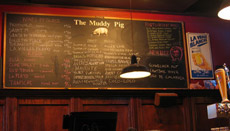
So just one bit of musing, then off to all that e-mail. First stop Thursday was The Muddy Pig in St. Paul, which bills itself as a “neighborhood bistro.” And it is. Good looking food menu, beer menu that includes descriptions of 48 beers on tap and a an excellent bottle selection, all set in a comfortable pub/tavern. (Photo is from their website.)

Muddy PigPlaces like this barely existed when we started research on the first Beer Travelers Guide in the early 1990s, and the best did not have a beer selection so inviting.
I considered beers from Belgium. I looked at the Bell’s offerings — who could turn down Two Hearted Ale, Hopslam or Expedition Stout? I’ve got the latter in my cooler, but Expedition Stout on tap . . .

Aside from my interest in drinking local I also did a bit of math. This was going to an 18-to-20 hour day, and drinking would continue from this moment on. I ordered Surly Mild.

Not a a beer that would have scored well in the Upper Mississippi Mash Out. A session-friendly 4.2% abv with the rich chocolate, caramel and roast you expect in a mild, but brimming with juicy hop character. The description said 31 BU but against a modest malt bill it seemed like more.

Much of the discussion about session beers has focused on alcohol content, but that should be only part of the conversation. A session beer needs to understand its place at the table. It’s there to facilitate the session, not to star.

Saint Arnold Brewing founder Brock Wagner defined this perfectly in a conversation several years ago.

“We want you to think about what you are drinking. I’ll think about the beer when I first taste it. After that I’m sitting there with my wife and with friends shooting the breeze and it becomes background,” he said. “But periodically I will think about the beer again.”

Maybe you have to be a hophead, which I am, and you certainly need to set aside your idea of traditional mild, but to me Surly Mild qualifies as an outstanding session beer.

Had I stuck with it my head would have thanked me the next morning.

Women and beer: Let’s ask a woman

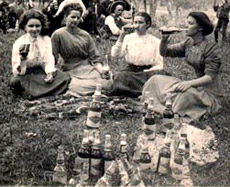
Women drinking beerI’m not sure (and neither is he) how Stephen Beaumont’s BeerTrends for 2008 #3: Chicks Dig Beer is going to turn out, but it looks like writing about marketing to women is a trend in the making. Witness:

“6 women, 6 decades, 6 beers,” at brewvana, which is not about marketing but how women perceive beer. Something marketers need to read.

Lew Bryson wrote about “One of the beer industry’s biggest oversights: not marketing to women.” And several beer blogs quickly cheered his suggestion beer execs make 2008 the year they discover women.

Beaumont chimed in to vote for the idea, but added the disclaimer: “Maybe it will happen this year, and maybe (more probably) it won’t.”

American Brewer magazine arrived with a story by Alan Moen headlined, “The Female Factor: Marketing Beer to Women.”

– Fort George Brewery announced a Craft Beer Appreciation Workshop for Women with Lisa Morrison, which pretty much brings us full circle. Lisa has been beating this drum longer and louder than most.

In fact, I sent her and e-mail shortly after Lew’s piece appeared to ask if it felt like this is something we’ve been talking about a long time.

“For us, yes. What Lew says has been said before,” she wrote back. “But it bears repeating until there’s actually a change.”

And then she reminded me why she’s known as the “Beer Goddess”:

“I don’t necessarily think beer should be marketed to women or men. Ads featuring women quaffing beer while scantily clad men hover around them is just as silly as the Twins/Swedish Bikini/babe of the day marketing we’ve been subjected to for decades. I certainly don’t think we need to start marketing beer ‘to’ women.”

An image comes to mind that we don’t want to see in a Bud Light commercial during he Super Bowl.