Memorial Day beer links, and just the links

Mount Sopris

It’s Memorial Day in America
Everybody’s on the road
Let’s remember our fallen heroes
Y’all be sure and drive slow

          — James McMurtry (listen here)

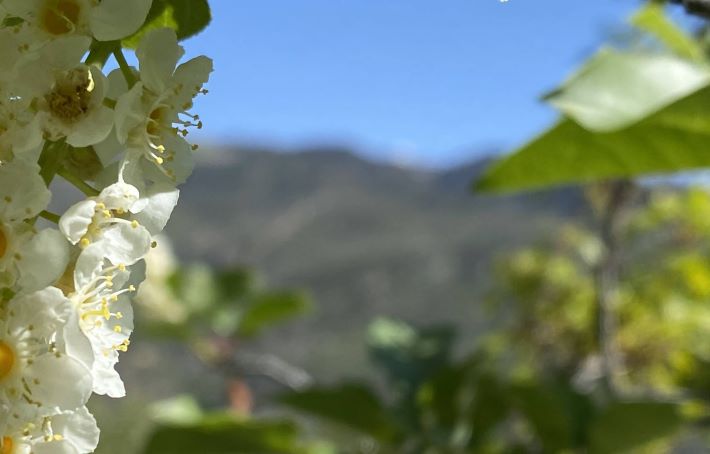
Wild flowers, overlooking Glenwood Canyon

The wild flowers are blooming and it has been a fine weekend for hiking in western Colorado. So just the basics . . .

Black Brewers Trade Group Sets Historic Precedent in Alcohol Industry.

The Brewers Association responds to questions about CBC. Stick around for the comments.

Alan McLeod adds more comments. Scroll down.

Children and Dogs in Pubs and Bars.

It is possible to have fun drinking beer in Paris.

Bridging into lager.

When Dogs Can Fly: Maryland’s Second Largest Brewery Leaves the State.

The Best Beer Cities in the U.S. (2023 Data).

Hello Darkness My Old Friend — In Search of American Porter.

Funky Buddha Brewery founders buy company back from Constellation Brands. The beginning of a trend?

TWTBWTW: CBC and ‘big beer’ wokeness redux

Lest your think, based on last week’s links, that the Craft Brewers Conference had no redeeming qualities read what Stephanie Grant wrote in her newsletter. She witnessed shining moments as well as the less pleasant ones.

She’s not about to overlook the latter, writing, “But before we look at growth, we must fix the problems within the industry. We have to reduce harm to our most vulnerable members. Otherwise, we will lose incredibly talented people because, frankly, we couldn’t get our shit together.”

– One of the high moments for many was an event to introduce the National Black Brewers Association. The association plans to . . . promote the Black brewing community; increase the number of African Americans in the brewing industry at all levels of production, especially ownership and brewmaster; exercise political influence by developing and advocating for effective policy; and foster an understanding of the history and legacy of African American brewing in the United States.

The organization’s first initiatives will include organizing a National Black Brewers Day celebrated in ten jurisdictions (cities or states) on Oct. 10. The day will recognize Theodore Mack Sr., one of the first first African American brewery owners in the country. Coincidentally, Oct. 10 is Indigenous People’s Day.

Funding for NBBA got off to a good start when Boston Beer company announced it is donating $225,000 to the association.

By the numbers
Belgium suffers humiliation at World Beer Cup with only two awards
The Brussels Times story with the alarmist headline points out the competition had a total of 24 “Belgian-style” beer categories, for which US beers took home most of the prizes. But that was true across the board. US brewers entered 80 percent of the beers and won 87 percent of the medals. In 2018 they won 80 percent of the medals, and in 2022 83 percent. The number of non-US medalist dropped from 51 to 40 between 2022 and 2023. California brewers alone won 53 medals.

Why beer was cheaper in 1516
“According to ZipRecruiter the average wages for a day labourer in Virginia (in 2023) would be $130.88 per day. In terms of purchasing power, a Bavarian day labourer (in 1516)without keep, if he spent a whole day’s wage on beer could buy 18 litres of beer, or 38 16oz pints, while our modern labourer could purchase just shy of 19, basically half as much.”

Your turn, Miller Lite
Women drinking beer clothed
Have all the beers gone woke?
“Think of it this way, whatever your political inclinations: The beers are the drinking buddies you suspect really don’t have your best interests at heart when they suggest you order just one more at the bar before you head home. They’ve been putting all of the rounds on your tab, and are drinking with the other guy at the bar who really irks you.”

Thumbs down
This Beer Was Brewed Specifically for Shoving Up a Chicken’s Butt.
Bad Collaborations
“I’ll throw it to you. Beer Can Chicken Beer: brilliant synergy or embarrassing gaffe?”

You might also enjoy
A day in the life
Martyn Cornell writes, “I will gladly put my hand up and say yes, I am a lucky fecker, there are very few other people who will get the opportunity to brew a collaboration beer at one of the best-known breweries, certainly in North America, possibly on the planet. What have I done to deserve it? I’d like to hope researching and writing more than 1.5 million words on the subject of beer and the history of beer over the past 35 and more years, which has bought me much pleasure, a few prizes, but little financial reward, at least entitles me to a jolly occasionally.”

Appalachian Mountain Brewery buys itself back
It doesn’t happen very often, but you can go home again. (It would be fun to know what the owners of AMB received when they sold their brewery in 2018 and what it cost them to buy it back from Anheuser-Busch, wouldn’t it?) In 1995, Miller Brewing bought Shipyard Brewing. In 2000, Miller sold the brewery back to its original owners. In 2003, I talked to principals Fred Forsley and Alan Pugsley about their experience for an article that appeared in The New Brewer.

Asked about the future (remember, 20 years ago), Forsley said, “I think there are going to be larger regionals that are successful and I think there are going to be smaller breweries that do well. In other words, I don’t think the middle size breweries will be there, that it’s difficult to survive. I think there’s room for people who are doing it for the love of beer, but not to have a growing business. But I think the economics are difficult for some of the people in the middle. The reality of life is that if you want to grow you have to feed the growth machine. You can stay small and be successful and be very happy, and I encourage that.”

Read this week’s beer links at your own risk

The Craft Brewers Conference happened last week in Nashville, with the not so shocking revelation that “To appeal to the younger generation—and female and BIPOC drinkers, in particular—breweries will need to take a hard look at what they’re doing.”

To appeal to female and BIPOC drinkers are words that will haunt the Brewers Association until something changes. What went wrong has been documented, so far, on Twitter and Instagram. The blowback is still blowing hard. I’ve tried to assemble a few of them in an order that makes sense.

Max Finnance wrote on Instagram:
“I had a (mostly) great time over the past week in Nashville hanging out with so many of my favorite people, but it came with some real lows. Lots of folks were less lucky.

“There are some amazing people at the @brewersassoc, including at least a few I consider friends, but organizationally I believe the BA is failing us as an industry. There seems to be a willful disconnect between its ‘identity’ as a trade organization and its mission to make Craft Beer a community welcoming to all. The desire to appease all members makes bad actors feel comfortable, and becomes hostile to the folks I most want to feel welcome at the table. If you left CBC ‘revitalized about working in the best industry in the world,’ you have your head in the sand. We have a terribly long way to go.

“I’ll be doing the work to help make this a better space, I hope you’ll join me.”

“Beyond offensive.”

“This industry is to incredibly broken.” Listen to everything Ren Navarro has to say. “The outrage you feel today is the outrage you should feel every day.” Read the highlights she put together.

“We demand more from an organization that leads our industry.” This is the sort of action that is needed.

“We highly encourage other breweries and attendees to ask for the same accountability directly with the BA to share their concerns as dues-paying members. There is power in our numbers and in performing direct action.” With a letter that shows how to do it.

Last month I wrote, “It’s not my goal to find less pleasant stories to balance the feel good ones, but some weeks that is pretty easy.” There were stories last week that you might label “feel good,” but by the time the week ended nothing felt very good.

TWTBWTW: Money, money, money

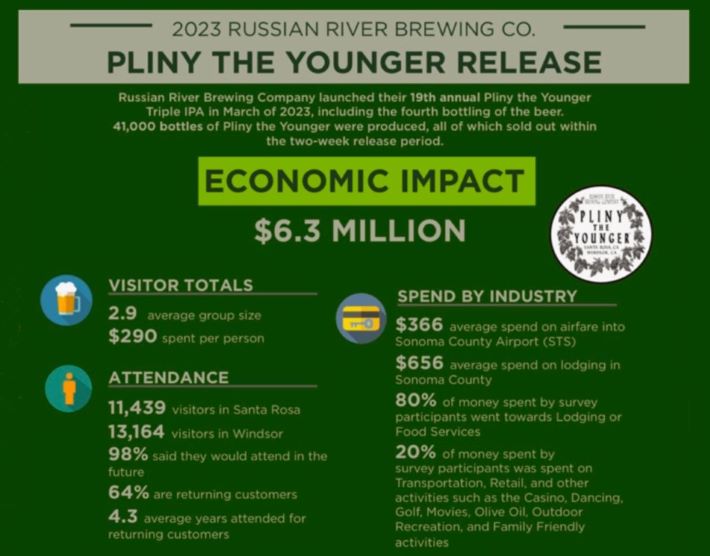
Pliny the Younger Economic Impact

Greetings from New Orleans, where I am much more focused on music (beginning today, beginning Thursday) than beer right now. So right to That Was The Beer Week That Was.

The birth of line culture
The link is to a transcript of the Taplines podcast, where links to the podcast are included. It is an interview with Russian River Brewing co-owner Natalie Cilruzo, talking about the phenomenon of Pliny the Younger. The graphic at the top illustrates the econonmic impact of the release of the Younger. It is a big deal, a success story about hospitality as much as beer.

“Our Windsor Brewery is what we call our new brewery. It’s our dream brewery. It’s really beautiful and we designed it from the ground up. We designed it for this release with the parking lot being oversized for the rest of the year. It’s virtually empty for the rest of the year. Not virtually, but rarely, do we half-fill the parking lot for the rest of the year. It’s huge. The whole front of the brewery has this giant sidewalk that snakes around the front of the brewery, which is designed for the Pliny the Younger line, to go around the whole front of the brewery. Unfortunately, sometimes the line goes all the way out to the sidewalk and then down the street which it did on Saturday. We have bathrooms. They’re on electronic locks and the bathrooms are designed to have an outdoor access that we keep open 24/7 during the Pliny the Younger release. There’s clean bathrooms that get cleaned every day that people can use if they’re here overnight or in the middle of the night or two o’clock in the morning, or whatever. This whole brewery on the hospitality side was designed for these two weeks and I can’t tell you how excited I was the first year that we released Pliny the Younger at both locations, so now we have it at our Santa Rosa location as well as the Windsor location.”

Questions provoked by High End layoffs
“If Stella can be made in breweries that make Budweiser, what’s to come for the much smaller brewers? It would seem inconceivable, but in theory Devils Backbone Vienna Lager could be brewed in other breweries, including those in Belgium.”

Read This Before Shopping for Your Bud Light Replacement Beer
Pair this one with the next. “Despite the passionate claims about its unique identity and its conservative political profile, the only value driving Bud Light, or any other consumer good available on a global scale, is the remorseless logic of shareholder value. That makes it hard to coherently express your politics with your beer preferences.”

If Companies Have Convictions, They Need to Stand By Them
Jeff Alworth writes, “Some years ago, I argued that it’s bad business for companies to take political positions. That was correct then, but it’s not anymore. The very act of reaching out to your own customers has become a political act. Now companies are going to have to define their values and own them, and when they find themselves under attack, be prepared to defend them. Depressingly, we customers are going to have to start paying attention to where our dollars are going in this whole long war.”

And once again I will quote something Pete Brown wrote in “Craft: An Argument.” That is, “(Craft) isn’t just about the things we make; it’s about the kind of people we are. And for this, we get to an unspoken assumption we may be reluctant to admit even to ourselves; we believe that makers and buyers of craft products are morally superior to other people.”

Small breweries that some call “craft” have benefited by what in unspoken; that they are the good guys. Recently, they’ve been asked to prove it. Many have. The rest? We’ll see what happens.

How Consolidation In the Middle Tier Is Impacting The Future of Craft Beer Brands
“As if growing craft beer producers didn’t have enough to contend with these days in the form of rising costs of goods, labor shortages, inflation, and the squeeze from alternative beverage choices in the marketplace, woes like wholesaler consolidation, unfair trade practices, and antiquated beverage alcohol regulations are making the middle tier the next big battleground for craft beer brands.”

On the importance of cask beer
Matthew Curtis has a question: “Instead of trying to modernize cask and turn it into something it very much isn’t, wouldn’t it be better to lean, hard, into its tradition?”

Thai beer fan fined for posting review
“Thailand is a country where it’s illegal for people to drink a beer and say it’s delicious.”

TWTBWTW: A beer business story & a culture war

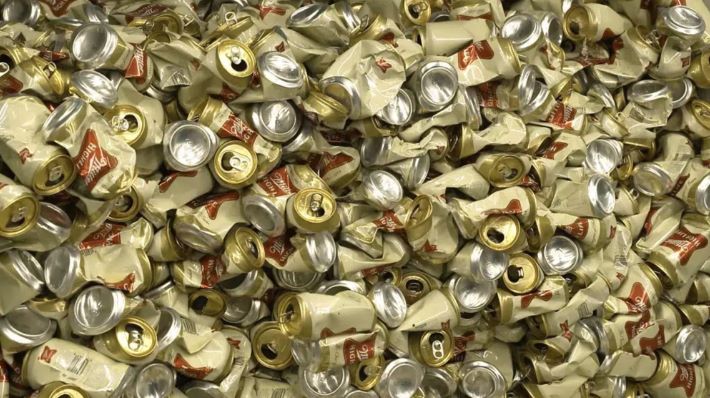
Miller High Life cans seized by French officials, defending the Champagne domain

Even the Wall Street Journal ran a story about and photo (credit to Associated Press) of cans of Miller High Life – “the Champagne of Beers” – being destroyed because only sparkling wines made in France’s Champagne region can use the name on their labels, according to French laws.

It would seem that beer still holds some cultural cachet.

You might also enjoy (or read without enjoyment in the case of the first one):

“The controversy surrounding Bud Light is a business story, but one caught in the midst of a culture war.”
This is one of those just go read the dang thing stories. Because . . . “When trans professionals leave careers they enjoy, it not only sets them back professionally but negatively affects the rest of the workforce. This is because people’s biases tend to soften upon developing a close relationship with a member of a marginalized group. It’s why the ‘coming out’ movement is widely credited with advancing marriage equality and other gay rights. Over the course of just two decades, millions of people in the U.S. realized that they had LGBTQ+ siblings, parents, friends, cousins, teachers, and roommates.”

Do Wild Ales Have a Marketing Problem?
Within the story, Stephanie Grant writes that every person she talked to while reporting it said these beers aren’t meant to be popular. “It’s a long game, for sure,” Lisa Boldt at Primitive Ales in Colorado told her. “It’s not a get-rich-quick scheme by any means.”

Speaking of mixed cultures . . .
Launched in 2014 by Yumi Shimada, Maíra Kimura, and Fernanda Ueno, craft brewery Japas Cervejaria combines the cofounders’ Brazilian and Japanese heritages. They are brewing and selling their beers in both Brazil and the United States.

Innovation I
Freeze-dried beer is not new, but Klosterbrauerei Neuzelle managing director Stefan Fritsche says this German version will revolutionize the brewing industry.

Innovation IIBack in 2009, when the beer blogosphere was broader, this statement from Ron Pattinson led to several other posts about what qualifies as innovation: “I’ll be honest with you. I don’t want innovative beer. . . . Worshipping at the alter of brewers’ egos. It’s not for me. I want something to drink, something that lifts my spirits and makes my heart soar. And, in sufficient quantities, will get me pissed. It’s really not complicated.”

I thought about this last week when I posted what Bart Watson said about craft reinventing itself. As Watson made clear, it is brewers intent on distributing their beer that face the biggest challenges. It becomes a business story, which Jeff Alworth addresses, headlining the post “Structural innovations.”

I chose the pieces of the some-assembly-required post Friday because I was thinking about the power of making connections. It is the super strength of breweries that make their businesseses work without the advantages that come with economies of scale. May not scream innovative, but it works.