The wide, wide, wide world of beer drinkers

“I am special, I am special! Please, God, please, don’t let me be normal!”

— Louisa, from The Fantasticks
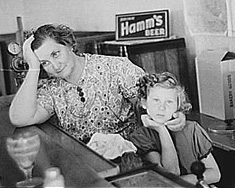
Beer drinkersWould you think me more special if I had tasted every particularly rare beer on the Rate Beer or Beer Advocate top howmanyever lists?

Is your palate better than mine because you appreciate the subtleties of low alcohol, lightly hopped beers and if I can’t taste a big-sized dose of Simcoe/Citra/Amarillo hops I’m bored silly?

Do you watch American Idol?

If you answered yes to any of the above I’m not quite sure why you are here. But, please, don’t leave. It’s little fun drinking alone; the point of drinking beer would be lost.

I’ve been considering this for almost two weeks, since Zak Avery posted his questioin about Elitism in Beer. To understand you should read that post and the comments, skip over to Alan’s follow up (again, the proof is in the comments), then back up to Tandleman’s Beer Blog, particularly this post (and, ahem, the comments).

Now indulge me by following one more link, this one to W. Blake Gray’s essay about “Why all wine lovers just don’t get along.”

He starts with a “study” from Constellation Brands a few years back that divided wine drinkers into six categories. The two he zeros in on are “Image Seekers” (he renames them “Quality Seekers”) and “Enthusiasts,” writing “The former spend the most money on wine; the latter expend the most verbiage on it. These are the only two who care enough about wine to read articles or blog posts about it.”

Hmmm. The others are: Overwhelmed (buy wine but don’t know anything about it); Satisfied Sippers (buy the same brand); Savvy Shoppers (look for discounts); and Traditionalists (like old wineries and are brand-loyal). I’m pretty sure that beer drinkers who would fit into similar categories can read, and I hope they do.

Anyway, I can’t resist this analogy: “And like a marriage entered into after one date, they are stuck together even though they’re incompatible, with verbal sparks flying all the time.”

To make the distinction clear he reduces it to one word (well, one word each, two in total).

Quality (or Image) Seekers want “great.”
Enthusiasts want “interesting.”

The beer-wine analogy is not perfect, but Gray says that Image Seekers (in this case I like the Constellation verbage) spend more and enthusiasts are reluctant to — in part because they understand how many great choices there are at more reasonable prices. “Quality Seekers would spend four times as much to get a wine that’s 10% better,” he writes.

Now to the nut.

What strikes me is how deaf both sides are to the other. The 100-point scale debate, for example: I’m always astounded that Enthusiasts want to take information away from Quality Seekers, and don’t even try to understand why they would want it.

Meanwhile, on the Quality Seekers side, they look at Enthusiasts the way people with jobs looked at tie-dyed student protesters. Yeah, yeah, you love the sound of your own voices. The louder you yell, the less I’m going to listen.

Go back and read the comments in the links above. You catch a bit of that sort of attitude, but you also get the sense that the participants understand (in part because they live in a relatively small country) they might some day continue their discussion in person rather than via a keyboard and computer screen.

Over a beer. So it will be civilized.

Which is what makes beer great.

Which beer is not like the others (II)?

It was kind of fun the other day, so let’s give it another try.

The goal, again, is to identify the outlier and explain why it doesn’t belong on the list. There may be more than one answer, although I happen to have a specific one in mind.

a) Three Floyd’s Alpha King
b) Fuller’s Vintage Ale
c) Ommegang Abbey Ale
d) De Ranke XX Bitter
e) Saint Arnold Summer Pils

Just so you know, nobody’s definition of “craft beer” sets any of these beers apart, nor does the country of origin.

The opposite of extreme beer? ‘Comfort beer’

A very nice article in the current Zymurgy (the magazine mailed to members of the American Homebrewers Association and also available on newsstands) by Martyn Cornell and Antony Hayes titled “Burton Ale: A British Comfort Beer.”

I particularly like this paragraph: “Burton Ale is a comforting beer brewed for adults. It is not an extreme beer catering to childish tastes, but a strong, rich beer, playing off plenty of bitterness against a sweet, malty undertone. It has no rough edges.”

And this one: “When brewing a Burton Ale, it is best to remember the things that comforted you most as a child — your teddy bear or blanket perhaps — and then aim for a beer that will evoke similar emotions.”

(If you grew up hugging pine cones, then obviously you’re gonna brew a different beer. That’s a discussion for another day.)

I must admit my shoulders drooped a bit when I read the recipe (which calls for an alarming amount of East Kent Golding hops — comparable to well over 3 pounds per barrel before dry hopping — and discovered a bit of bad news: “Rack into maturation tanks and mature for a year.”

There’s a reason they call them maturation tanks.

When Duvel brewed Ommegang, round 1

The story Adam has at beernews.org that Belgian brewery Duvel will produce Brewery Ommegang beers — otherwise made in Cooperstown, New York — may seem familiar. Duvel briefly brewed Ommegang beers five years ago when demand outstripped capacity.

Back then I took samples of Ommegang Abbey Ale brewed both in Belgium and New York to a local brewpub and asked customers there on a Sunday afternoon — most of whom, it turned out, had never tried anything from Belgium or even inspired by Belgian beers — if they could tell the difference. I repeated the experiment twice more, including with friends as interested in wine as beer, then hard-core beer savvy types who viewed the test as a challenge.

I’ve added the story that resulted to the library.

***SPOILER ALERT-SPOILER ALERT*** For those who don’t want to bother with the click the results are summarized below.

******
******
******
******
******

Quick summary of the results: Just over half (that’s chance) correctly picked out the odd beer in a “triangle tasting,” and 57 percent preferred the Cooperstown version.

Decoction and other stray beer thoughts

Fine post at DesJardin Brewing centered on Jason Oliver, Devil Backbone Brewing and the excellent lagers Oliver brews there. Oliver gets a chance speak at length about why decoction (during which some of the mash is removed, boiled and returned to the original mash, often two or three times) matters. Good stuff, but I do wish he hadn’t said this:

What you can’t substitute is the romance of decoction! Even if you do not notice any difference in a beers taste, the fact you did one is not made any less valid. Craft brewing is a craft, and using a traditional method to brew a traditional beer is something to be celebrated not denigrated. My advice is if you can decoct it then do it on special brews, it makes it extra special, extra traditional, and extra authentic.

He and I talked a while back about how decoction adds flavor and texture to some beers. If you take the time to read “Decocting with Jason Oliver” you’ll notice not everybody agrees.

A few years ago Martin Krottenthaler, a professor at the Weihenstephan brewing university north of Munich, talked about research comparing decoction mashing and less-time consuming infusion mashing. He flipped through PowerPoint slides, explaining why lesser malts once made decoction necessary. “Boiling is boiling,” he said, showing benchmarks that the chemists recorded were different throughout the two processes but the resulting worts produced almost identical profiles.

Then he introduced the human element. A tasting panel basically confirmed the results, because few of its members could tell the difference — but Krottenthaler was one of those who could pick out the beers produced using decoction. “For me it was significant,” he said.

Krottenthaler’s experience is what decoctionist (yes, I just made that word up) should be talking about. I agree with Oliver that brewers make a statement about the artisanal aspect of their craft when they choose to use decoction. But it’s an empty gesture if the beer they create doesn’t actually taste better. It feels like we’ve stepped into the dreaded realm of marketing.

The reason to value traditional brewing methods is not simply that they are traditional but that they result in beers that tastes better. Try the ones from Devils Backbone and you’ll understand.

  • Thanks to @olllllo for this link to “Foodies gone wild: A plea for calm among foodies from a part-time food writer who’s part of the problem.”. Adding context to the discussion about “regular” beer.
  • I haven’t not looked at Beer Magazine since it first came out, but George de Piro (brewmaster at C.H. Evans Brewing Company’s Albany Pump Station and an occasional bloggers) does not seem to be giving it a thumbs up:

    If that’s not enough for you, here’s a gem from page 27, where the author eloquently states the purpose of hops is to “…provide balance to the beer just as a girl’s left boob does for her right. One without the other is a freakish carny.”

    And that’s the stuff you can print in a family blog.

  • TIME profiles Sam Calagione, and provides a look at “craft brewing” from the outside in. Among other statements: “Such lack of brand loyalty may actually force smaller brewers to constantly release new concoctions, lest their fickle audience lose interest.”

    Is the writer talking to you?