The other day, Lew Bryson repeated a quote from New Belgium brewer Matt Gilliland from his story in Beer Advocate magazine headlined: “Extremely Boring.”
It sounds a little like science, the sort of thing people will start repeating, and we’ll end up stuck with a slightly cock-eyed idea. Let’s not.
Gilliland said:
“From an evolutionary perspective, people are predisposed to not like bitter flavors because it means poison, sick, bad. What percentage of people in the U.S. do you think have overcome that genetic hard-wiring and really like 100 IBU beer? There you go, that’s your market.”
Yes, if you feed a baby something bitter he or she will reflexively recoil. Bitterness is an acquired taste. We can “overcome the hard-wiring,” and there’s a lot better chance those of us you do will enjoy a healthy, balanced diet.
In moving on from the bland food of the mid-twentieth century, Americans more recently have begun eating like the rest of the world. (And some would argue the rest of the world, unfortunately, is eating more like 1970s Americans). Bitter is making a comeback, although salty, sweet and fatty foods dominate about as much as mainstream lagers.
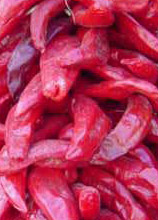 And if bitter signals danger then maybe it works in the brain a little like capsaicin, the chemical component that gives chiles their heat. A variety of studies in the last 20-some years hypothesized that capsaicin releases endorphins in your brain. These create something akin to a “runner’s high” or the rush you get when riding a roller coaster.
At the extreme this is because of the pain you inflict on yourself by eating hot, spicy food. But there’s also a learned component – you figure out how to enjoy a level of heat that doesn’t (physically) injure your taste buds. Similarly, we learn that some medicine is bitter and it is good for us. Another example: the flavors of chocolate do cause your brain to release endorphins – and Americans are learning to appreciate more bitter chocolate.
OK, here’s the leap of faith, the stuff I’m making up without any scientific backing. Let’s say you drink a beer with a solid dose of hops. The little danger alarms go off you in brain (“Bitter! Bitter!”) for a moment. Then there’s a rush – from endorphins or not – when you realize this tastes good and you haven’t keeled over dead.
Or there’s an actual trigger, like from casaicins, and endorphins are released.
Either way you feel a little more euphoric – but without increasing your alcohol blood level (than you already have by drinking that beer). Just a thought.
Back to the top. This isn’t presented as a defense of 100 IBU beer (Gilliland’s number – one more brewers claim than achieve). Those beers succeed or fail, and since I’m a hophead many succeed, on their own merits.
Let’s not blame hard-wiring.
Added March 18: It has been pointed out to me in a polite e-mail that my silly bit of “bitter science” quite contradicts my complaint at the top about statements that “sound a little like science.”
Yep, I was dead wrong. I should have left the chiles, casaicins and endorphins out of the discussion. There is a reason to embrace (reasonably) bitter flavors. As we grow older our taste buds die (and our sense of smell begins to be diminished). A particularly noticeable drop off occurs at about 60.
This particularly concerns nutritionists. Tossing more salt and sugar on food for “more flavor” isn’t particularly healthy. Spicy (OK, I had to worked green chiles, rich in vitamins in there somewhere) may be better. Bitterness – which might come from fruits, vegetables or herbs – may add flavor without shortening your lifespan.
The level of bitterness, of course, depends on individual tastes.
 But I will write that one thing I want it to mean is that context makes a difference. Before you fire off another what the heck question, look at the contest Alan McLeod has invented at A Good Beer Blog. It illustrates the value of context.
 All the best ideas end up with beer.