Because what would life be without petty debates?

MONDAY BEER LINKS, MUSING 08.11.14

EVERYTHING wrong with Beer at this moment. It’s a list. That would be more obvious if each item had a number in front of it. But it’s a list, and proof that (contrary to the impression I might sometimes toss about here) not all lists are bad. A comment from Pete Brown provides a bit of balance, “But the petty debates only matter if you pay attention to them: the momentum behind beer is now bigger and more powerful than a bunch of bloggers and hopheads can have any control over.” (Thanks to Roger Baylor for mentioning the comment — one disadvantage to saving things in Pocket and not revisiting posts.)
[Via Beer Compurgation]

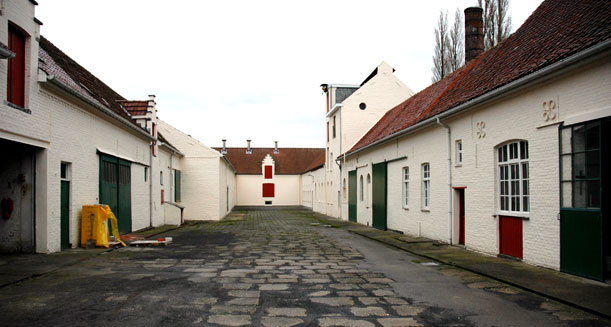
The Belgian brewery: fifty shades of grey
Carl Kins — pro tip: a go-to source for information about Belgian beer — did not write this to help bloggers prep for the next Session, although anybody posting about their “First Belgian” might start by considering just what “Belgian beer” means.
[Via Belgian Beer Specialist]

Why Does Craft Beer Suddenly Seem to Have a Problem With Women? Not exactly suddenly, but evidence that things are no better in 2014 than they were in 2012 (Honest Pint: Sexist Shouldn’t Sell)
[Via Guys Drinking Beer]

Thanks to anonymous supporters Stone Brewing reached goal of Groundbreaking campaign! The campaign received plenty of negative attention but blasted right through its one million dollar target. Lots of large contributions. “But it looks like that some retailers and some ‘anonymous’ friends helped out and bought huge amounts of cases of beer in the last weeks…. I bet that retailers and wholesalers from all over the world bought the beers to resell it to their customers for a higher price.”
[Via Lieblingbier]

The Wine Blogging Community Is A Joke (But It Doesn’t Have To Be That Way). Is this true? “Because we (wine bloggers) are a joke of a community online, particularly when compared to our beer and spirits counterparts.”
[Via 1 Wine Dude]

Local beer: 63105

Beamer Eisele of Modern Brewery hard at work

More than an hour into the Modern Brewery’s launch party Friday at Craft Beer Cellar Clayton CEO/president Beamer Eisele was still in the store cooler, struggling to get a third keg of the brewery’s beer online. He’d already been back to the brewery to pick up the proper equipment.

“Now I can enjoy the party,” he said after the final beer was flowing. A few minutes later he and partner Ronnie Fink (that’s Eisele above and Fink below) looked at the line for beer at the rather small tasting bar in the back of the store and at friends and CBC customers pretty much filling up the place. Eisele sighed, then headed back to the brewery, this time to pick up another keg.

Ronnie Fink of Modern Brewery talks with a customer

Now that Modern Brewery is officially open there are four breweries within four miles of our house. When we moved to Clayton (ZIP Code 63105) three years ago there was one.

Clayton CBC, the western-most outpost of a chain that started in Massachusetts, just opened in May. It’s a 15-minute walk from there to The Wine and Cheese Place, the best retail store in Missouri, according to Rate Beer members and many others. For its weekly tasting Friday, Wine and Cheese was pouring Cathedral Square Ave Maria Bourbon Barrel Aged, Alpha Brewing Lapsided, Summit Brewing Sparkling Ale, Brasserie La Goutte D’Or La Mome Saison Orientale, and Brouwerij Verhaeghe Barbe Ruby Kriek.

Last month, Book & Bailey wrote that “For some, local is enough.” Local is important to me. It really does make a beer taste better (no I’m not suggesting it is something that might be replicated in a blind taste test). I’m pretty sure that it is “enough” to build a business on, but that “enough” must includes a decent level of skill in the brewhouse. There are too many quality beers, local and not-so-local, close at hand not to notice when others don’t measure up.

Write about beer; win prizes

– North American Guild of Beer Writers Awards

The deadline to enter is Aug. 25, and the whole process happens on line – right here.

“The NAGBW Awards honor the best beer and brewing industry coverage in eight categories. Journalism, feature writing, freelance authors, blogs and broadcast, published in print or online, are eligible.” For beer writing/broadcasts published between July 1, 2013 and June 30, 2014.

Those of us judging would really appreciate some top notch entries. Don’t be shy.

– British Guild of Beer Writers’ Awards

The deadline ot enter is Sept. 5 and involves the post office, so you might want to get those entries off early. Details are here.

“The competition is open to writers, broadcasters, photographers, poets, illustrators, designers, webmasters and bloggers whose work has broadened the public’s knowledge of beer and pubs over the past year. You do NOT have to be a member of the Guild of Beer Writers to enter and we welcome nominations by third parties – so if you have been impressed by a press article, book or blog about beer, please think about entering it.” For work published or broacast between Sept. 1, 2013 and Aug., 31 2014.

– The Geoffrey Ballard Essay Award

The first two are for published work. This one is for work you’d like to see published in Brewery History, the Journal of the Brewery History Society. Entries will be evaluated using the journal’s standard criteria for selection (i.e. excellence and interest to a wide audience) and will be published in the journal. The deadline is Jan. 31, 2015, and the details are here.

The winning essay will be published in Brewery History and also earns a £250 prize. “The unpublished essay, based on original research, should fall within the remit of Brewery History, i.e. it should be concerned with the history of beer and/or its ingredients; histories of existing and/or closed breweries; research on associated industries (e.g. malting, hops, retailing, &c.); or studies into the social, political and economic impact of beer and/or the brewing industry.”

Session #91 announced: ‘My first Belgian’

The SessionBreandán Kearney at Belgian Smaak has announced the topic for the 91st gathering of The Session will be “My First Belgian.”

Marching orders could not be simpler: “The rules are that there are no rules. There is incredible opportunity at your fingertips; whether it be to write about the first time you tried a Flemish red brown ale or the time you got your taste buds around a traditional Belgian witbier.”

And for old timers like myself, who might have forgotten just what the first Belgian beer they drank might have been, no pressure. “It doesn’t even have to be your ‘first’. You could use the Session title as a reference to a moment when after many years of drinking a particular Belgian beer your eyes were suddenly opened to its charm, whether that be down to the particular circumstances surrounding its consumption or a personal story you’d like to share.”

The next Session is Sept. 5.

Book recommendation: Brew Britannia

In 1977 in Dorset, a town in the south of England where Thomas Hardy’s Ale was first brewed in 1968, a splinter group of the Campaign for Real Ale calling itself The Real Ale Liberation Front engaged in “acts of civil disobedience.” They would order pints of beer dispensed from a keg— CAMRA was organized to preserve cask beer, at the time under threat from keg beer — then refuse to pay for them.

Nearly thirty years later BrewDog in Scotland turned “kegging into a statement” — a sign of a young, open-minded brewery. It was a message intended for CAMRA.

CAMRA has not eliminated keg beer, and the success of BrewDog and a legion of small breweries who sell “keg craft beer” has not eliminated CAMRA. Sure, authors Jessica Boak and Ray Bailey recount both success stories and failures in “Brew Britannia: The Strange Rebirth of British Beer,” but this is more simply a book about people who care about beer. And what can happen when people care about beer.

Those who read Boak & Baley’s Beer Blog will know what to expect — particularly since regulars sometimes had a sense they were seeing parts of chapters written before their eyes. The writing is straightforward and unpretentious, easy to read even for those whose primary language is American. Reviews from several writers in England (Alan McLeod has links, although not to Pete Brown’s late submission) sometimes suggest the authors should have emphasized particular people or events more or less. But none of them, most of whom have been writing about beer longer than the authors, questions the research. It is superb. There will be no online wiki for “Brew Britannia.”

There are a couple of books I’ve recently praised in this space by suggesting I wish I’d written them. I wouldn’t tell you that about “Brew Britannia.” I’m not as generous as Boak and Bailey. Had a publisher been silly enough to commission me I would have insisted on devoting an entire chapter to Sean Franklin, for instance, or tracking down members of The Real Ale Liberation Front (if they had jackets with cool logos sewn onto the backs I want one of them). The book would have been missing seventy percent of the essential information it contains.

Instead “Brew Britannia” serves two masters — those who want to read scores of delightful stories about people who care, stories that together provide meaningful context; and those who twenty or sixty or how many ever years in the future are going to come looking for a source they can trust.