Twitter just told me this is National Book Lovers Day. So I drug this column Daria and I wrote for All About Beer magazine off of the storage drive it was sleeping on. It went to print in May 2000, and a few things may have changed.
When the Blue Moon Tavern in Seattle, Wash., celebrated its 50th anniversary in 1984 the bar sponsored a bathroom graffiti contest as part of the celebration. The winning entry read “Some nights the wolves are silent and the moon howls.”
Customers visit the Moon for many reasons: to pick from a solid selection of Northwest craft beer on tap, to listen to live and loud music, to play pool, and even to gain inspiration to write such graffiti. They sit on barstools where Pulitzer Prize winners once carried on and listen to poetry from a stage where anybody is welcome the first Wednesday of each month.
We’re pretty sure we can call the Blue Moon a literary bar.
It is much easier to define a brewpub or sports bar than a literary bar. Some — like the White Horse Tavern in Manhattan, where Dylan Thomas was a regular customer and probably took his last drink — promote links to specific writers. Others — like Dressel’s Pub in St. Louis, where the logo shows Beethoven, Louis Armstrong, Emily Dickinson and Mark Twain hanging out together — celebrate respect for the arts.
Quite simply, they have beer and books in common. Beer and books may not be featured together in beer commercials on TV. Books don’t make anybody’s “hot” list when it comes to bar trends or theme bars. However, books and beer do go nicely together and the places where that happens particularly well should be treasured.
The most noteworthy literary bars have the advantage of history, but there are plenty of newer places that understand the connection. Many brewpubs and bars host poetry slams and set aside evenings for the spoken word. Sometimes the names make them easy to spot, although figuring out about the beer is a little more difficult. The Library on Austin’s famous Sixth Street draws a student crowd for pretty routine beer, but the Library Ale House in Santa Monica is a Mecca in the Los Angeles area.
Then there is the Library Restaurant and Brewing Co. in Laramie, Wyo. The restaurant and brewery are in what used to be a domed mall. Now the walls are lined with bookshelves and the dome gives the place a genuine library reading room feel. The bar area, which draws a student crowd and can get noisy, is separate.
Afterwords, a cafe with a small bar area, is different still. It is connected to Kramerbooks, a great and popular bookstore in Dupont Circle. It’s actually a full restaurant with excellent food and a fine patio and the bar has a dozen taps with imports and craft beers. The bar is literally a step away from shelves of books. The bookstore itself is a popular singles hangout and particularly crowded on weekend nights; it didn’t need the additional fame that Monica Lewinsky brought by shopping there.
To the Moon
The Blue Moon opened in 1934 and poet Carolyn Kizer, who helped make it famous with an article in The Nation magazine in 1955, described it as “a grubby oasis just outside the University’s one-mile-limit Sahara.” For a long time after the end of Prohibition, bars were not allowed to operate within a mile of the University of Washington campus. After Jack David bought the place in the 1950s it morphed from being a student hangout into a gathering place for intellectuals.
One Moon regular, Joe Butterworth, reportedly lost his UW professor’s job after being named a Communist during the Red Scare of the 1950s. He sat in the Blue Moon after his dismissal and translated the Communist Manifesto into Old English, occasionally entertaining friends with dirty limericks.
Dylan Thomas, Allen Ginsberg and Jack Kerouac all drank there. Later Ken Kesey stopped in. Pulitzer Prize-winning poet Theodore Roethke was a regular and celebrated his 1954 Pulitzer for poetry there.
“All those poets and writers came in and did their work there while drinking beer,” said Jim David, who briefly partnered with his brother at the bar and often served drinks.
Novelist Tom Robbins was another regular, and reportedly once tried to place a phone call from the Blue Moon to artist Pablo Picasso in Spain. Robbins captured the essence of the Moon as well as anyone can in a sentence when he called it “a frenzy of distorted joy spinning just outside the reach of bourgeois horrors.”
We visited on a summer Sunday afternoon and although school was not in session it was quite crowded. Some patrons sat with their backs to the windows, books cradled in their laps, pint glasses on the tables in front of them. A man with a beard and a ponytail offered to juggle just about anything other customers gave him, meanwhile carrying on a loud conversation about baseball with the bartender.
We grabbed one Deschutes Mirror Pond Ale and one Grant’s Imperial Stout and settled into a high-backed wooden booth decorated with carved initials. The table also had been initialed, worn and carved into again. The walls are covered with posters, many of them mounted years ago. Bumper stickers may be contemporary (“No Newts”) or for the ages (“Kill your television”). On the wall behind our booth was a 1939 map that picture the Holy Roman Empire during the 10th and 11 centuries. Beside that was a picture of Jerry Garcia and beside that a Grateful Dead poster from 1979.
Sunday nights are still for the Grateful Dead, while live music performances are common on Saturday nights. Wednesday continues to be for poetry readings and open-mike nights. On occasion, the stage is turned over to the “Deaf Poets Society” and its members sign their work to the audience.
Call of the wild
Jack London not only frequented Heinold’s First and Last Chance Saloon in Oakland, Calif., he studied there as a youth and then wrote notes for The Sea Wolf and Call of the Wild at his favorite table.
Other times he’d sit quietly and listen to sailors’ tales, and many of the tales and the tellers later appeared in his books. Heinold and the saloon are referred to 17 times in his novels John Barleycorn and The Tales of the Fish Patrol. The cabin he lived in during the 1897 Yukon Gold Rush is right outside in Jack London Square.
The tavern was built in 1883 from the timbers of old whaling ships. It’s a tiny place (five stools at the bar, three tables) but attracted many notables in serving the Port of Oakland. Robert Louis Stevenson spent time while waiting for his ship to be outfitted for his final cruise to Samoa. Erskine Caldwell, Robert Service, Ambrose Bierce and even President William Howard Taft drank at Heinold’s.
It took the name First and Last Chance because it was the last bar a ferry passenger, and later a serviceman, could drink in before boarding ship, and the first one to greet him upon his return. As a good-luck talisman, servicemen would leave money on the walls, ensuring they would be able to buy a drink when they landed back on shore. Tragically, much of it was never reclaimed.
The 1906 earthquake that destroyed San Francisco left the bar permanently tilted. It also caused an old clock to stop, and it still registers the time the quake struck.
‘Do not go gentle …’
The White Horse Tavern, which has been around since 1880, emphasizes its link with poet Dylan Thomas rather than the plethora of other writers who also hung out there in the 1950s. Thomas came to the United States in the late ’40s to travel the college circuit and made his home in New York City. Because it was (and is) very publike it is said that it reminded Thomas of his hometown of Swansea, Wales, and it soon became his local.
He did not drink alone. Writer Vance Bourajaily chaired Sunday afternoon roundtables, with regulars like Norman Mailer, John Clellon Holmes and Herman Wouk. Kerouac and Ginsberg also stopped in at times.
Thomas, who died of alcohol abuse in 1953 at the age of 39, probably drank his last whiskey at the White Horse. He attempted to set some sort of record one night, reportedly downing 19 whiskies in 90 minutes, perhaps starting at nearby Chumley’s but definitely finishing at the White Horse. Legend has it that Thomas walked out of the White Horse and dropped dead. Actually, he returned to the White Horse for a few beers the next day before heading home and collapsing into a coma. He died five days later from alcohol abuse and diabetes rather than a single binge.
The White Horse has a Dylan Thomas room complete with a Dylan Thomas table and a variety of Thomas pictures and other items on the walls. The time to see them is during the week, because the weekend tourist crowd can be rowdier.
The beer at Chumley’s (22 taps) is more interesting, although it too can get crowded on weekends, when a younger crowd is drawn to the former speakeasy. Just like in the 1920s, the entrance is only marked by a number above an unmarked door at 86 Bedford Street. The owners like to promote using a secret knock and password (although all you have to do is open the door). There’s another entrance off 58 Barrow Street, through a courtyard called Chumley’s Mews and an unmarked wooden door that opens into the bar area.
Chumley’s pays homage to the writers who drank there by putting framed covers of their books on the walls, prominently featuring Kerouac, John Steinbeck, Ernest Hemingway and Edna Ferber. F. Scott Fitzgerald allegedly wrote part of The Great Gatsby in a corner booth. Also, Robert Kennedy is said to have written a speech there.
Where the boxes never juke
A sign outside Dressel’s warns this is a pub “where the boxes never juke.” The background music includes classical and opera, and the walls bear pictures of famous composers and writers, and posters in Welsh. One large section is devoted to Dylan Thomas, and others on the wall include Ernest Hemingway and James Baldwin. Surprisingly it is one of two Welsh pubs in St. Louis’ Central West End. Llywelyn’s Pub, right around the corner, is a little larger and has more of an American feel. Both have been serving Washington University students and faculty for nearly 20 years.
Dressel’s also draws a post-theater crowd, when you might have to wait for a serving of the Bavarian Chips, an exquisite mating of potato chips and French fries. Warmly lit with a string of gold lights glowing around the top of the tile-topped, oval bar, the décor features light colored wood paneling and brick walls. The pub towels are from the Felinfoel Brewery and the stained-glass windows have the Welsh dragon on them. Beer, mostly from the U.K., is served in Imperial pints filled to the brim. It also offers an extensive menu of single malts, ports and cognacs and has a separate upstairs bar.
What’s not to like about Dressel’s? We don’t think we’d feel comfortable scribbling graffiti on the bathroom walls.
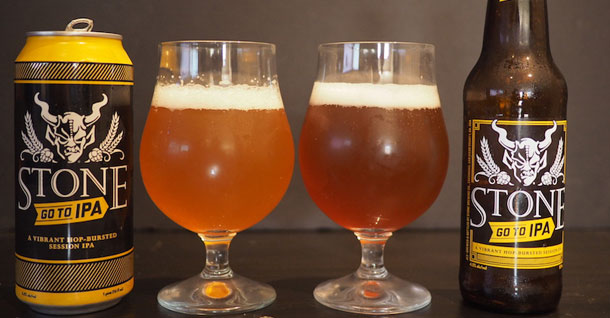
 There is such a thing as an Americanized pilsner out there that has nothing to do with Miller Lite. Who You Callin’ Wussie from Arrogant Brewing* is an example. It is a well made flavorful beer, brimming with lots of aromas and flavors, some of which you won’t find in an old world pilsner. Basically, it’s kind of loud and it bangs into the furniture. That’s OK, as long as it is adding diversity, not eliminating choice. These are the sorts of things you should be thinking about when you read Lew Bryson’s column in All About Beer.