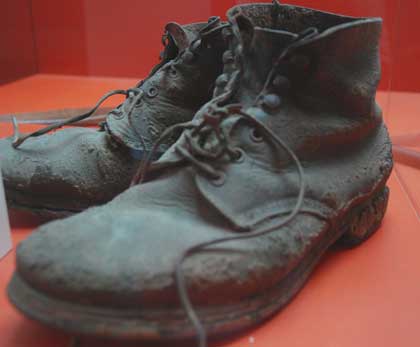
Today at Grantland, Michael Kruse examines how those wild and wacky uniforms have helped turn the University of Oregon into a national college football power.
. . . the head of a think tank and a visiting scholar at Berkeley’s Center for Research on Social Change gave a wonky talk at a conference in Cambridge, Mass. “We are headed,” Michael H. Goldhaber said, “into what I call the attention economy.”
Economics is the study of the allocation of resources that are scarce. These days, more and more, information isn’t scarce. Stuff isn’t scarce. What’s scarce is attention. The companies that win in an attention economy are those that win the eyeballs of people who have too much to look at. Too many ads. Too many screens in too many places. Too many games on too many channels on too many days of the week.
“This new economy,” Goldhaber said in Cambridge in January 1997, “is based on endless originality.
“If you have enough attention,” he added, “you can get anything you want.”
The uniforms got the attention of talented high school football players from across the nation. That’s where the story begins and ends, but there are other things to consider along the way. These are relative to beers that are different; weird, wacky, extreme if you like, but maybe only as different a pumpkin beers.
At times this might be a little unsettling.
“If attention is now at the center of the economy rather than stuff, then so is style,” UCLA professor Richard Lanham wrote in The Economics of Attention: Style and Substance in the Age of Information. “It moves from the periphery to the center. Style and substance trade places.
“Push style to the extreme,” Lanham wrote, “and it becomes substance.”
I can’t decide if this sounds like an endorsement for extreme beer or an Onion headline.
 There is much
 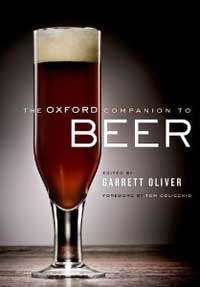 Can you imagine two wine drinkers sitting in a cafe arguing about monoterpenes1 and asking the bartender to drag a copy of The Oxford Companion to Wine from the the bookshelf to settle a bet?
 on top of a bar, it’s otherwise elegant cover a bit beer stained.